
Last updated October 15, 2026
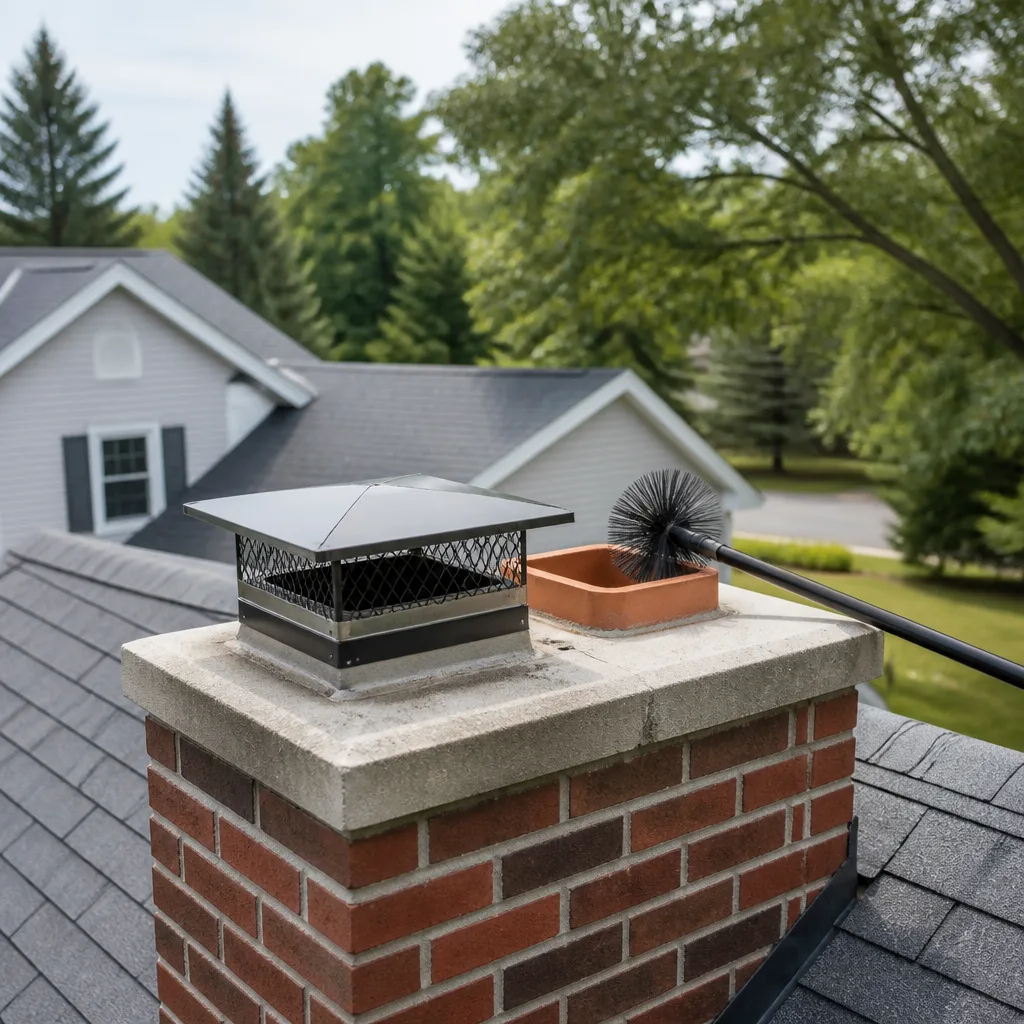 Sweep & inspection
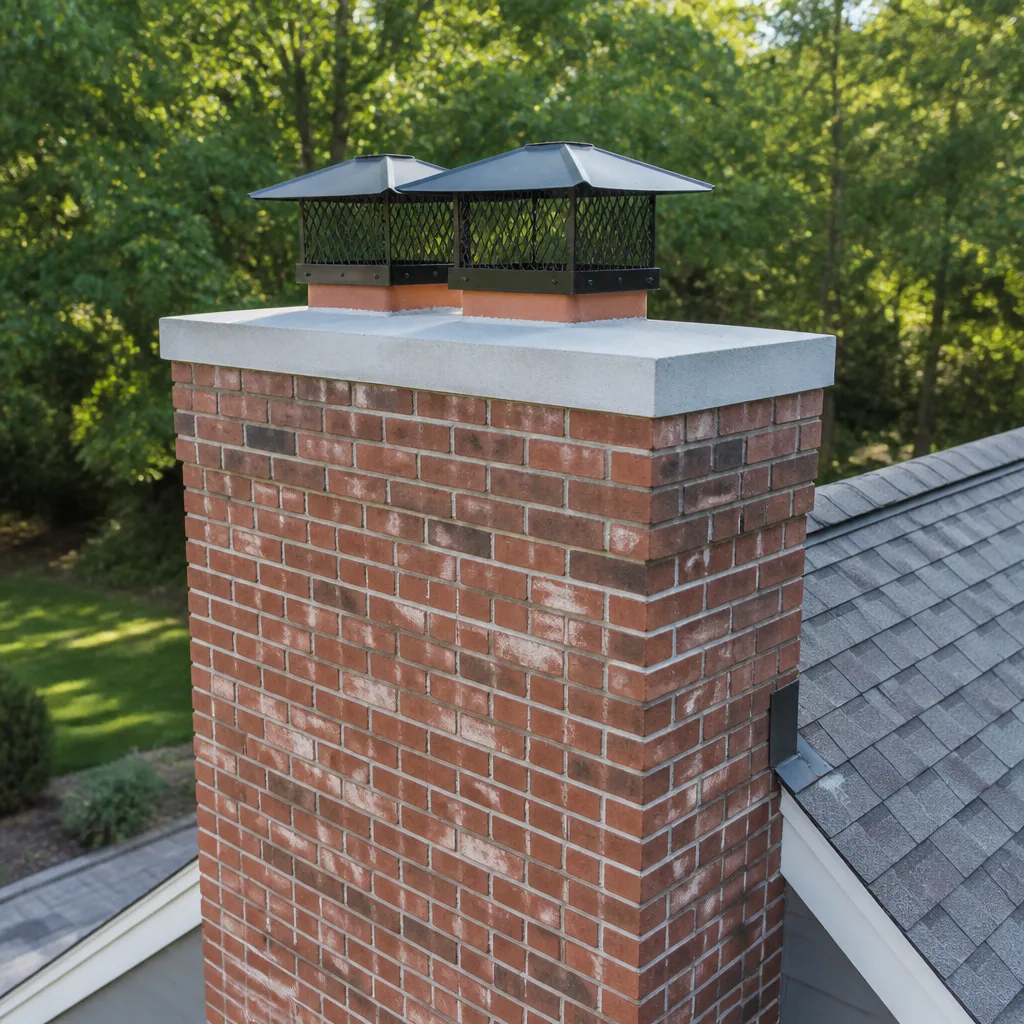 Caps & crowns
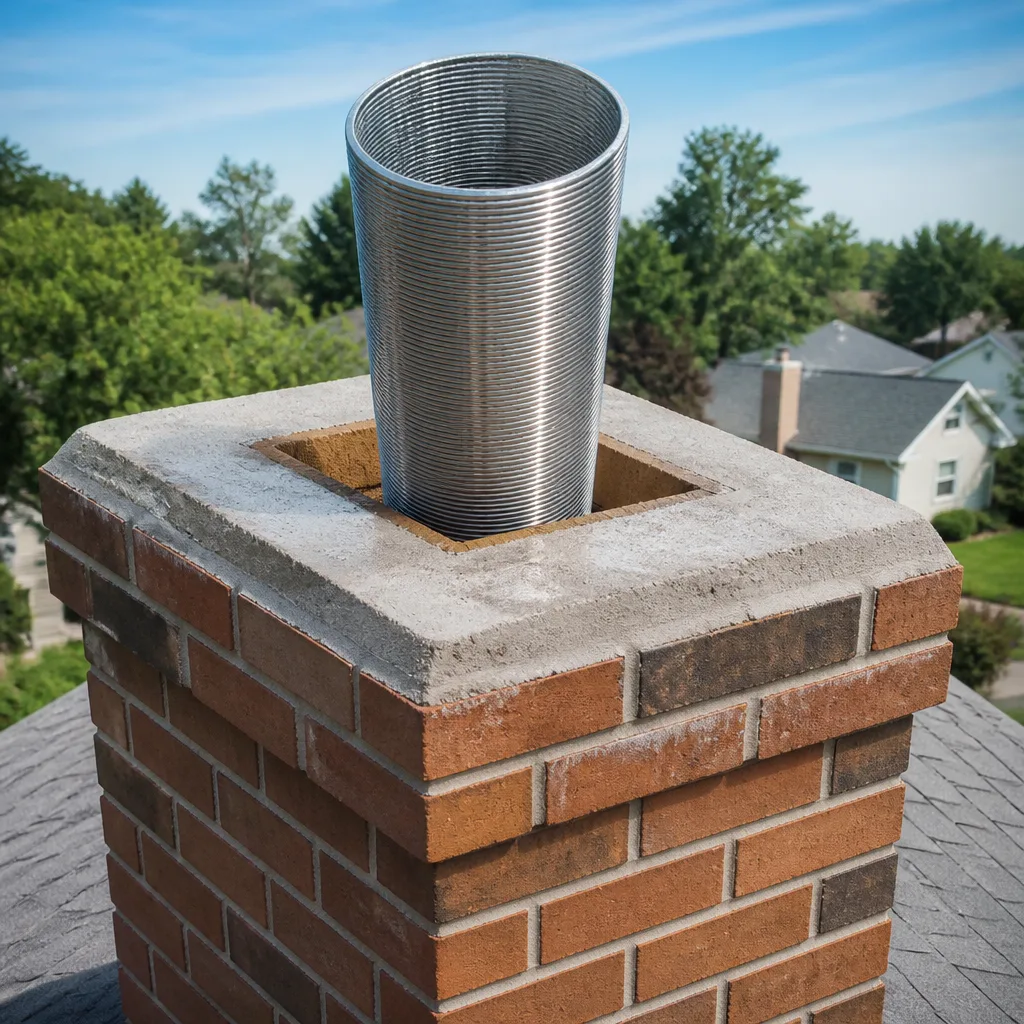 Flue relining
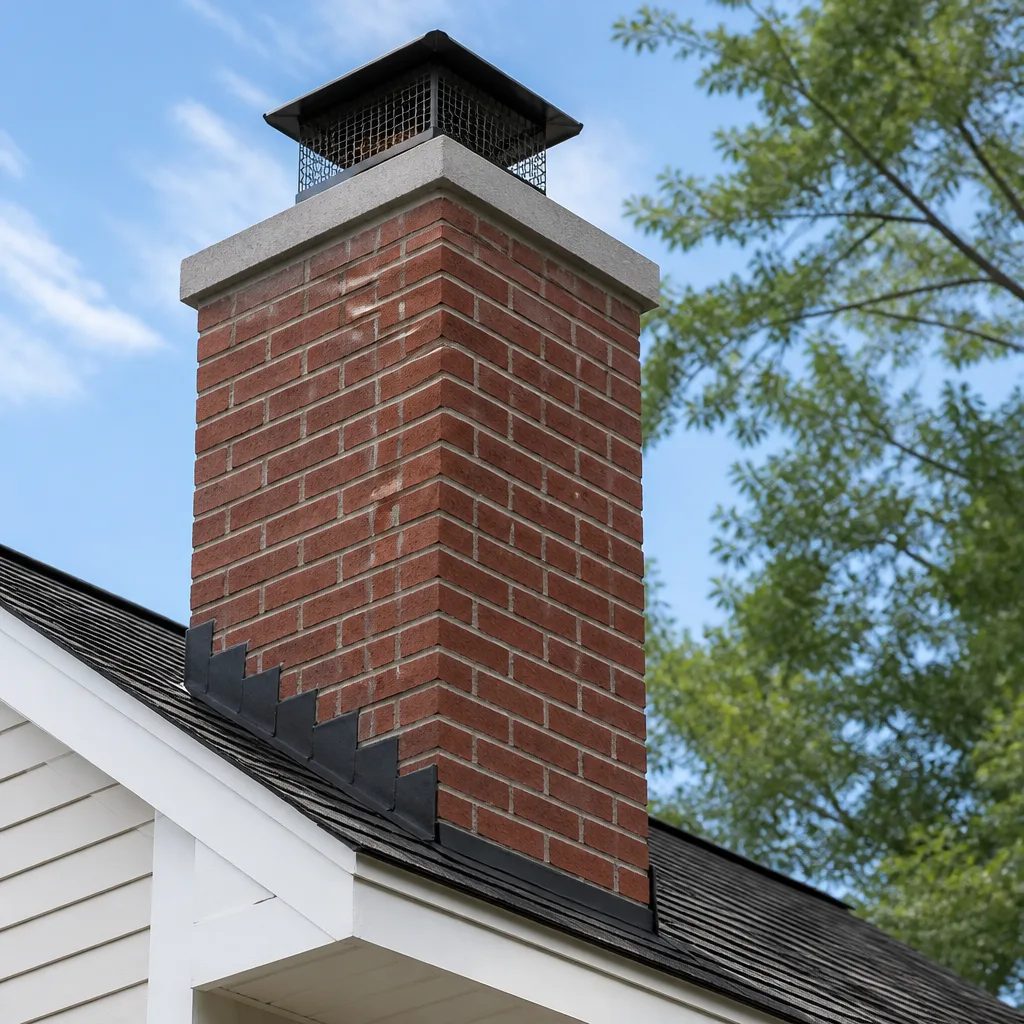 Masonry repair
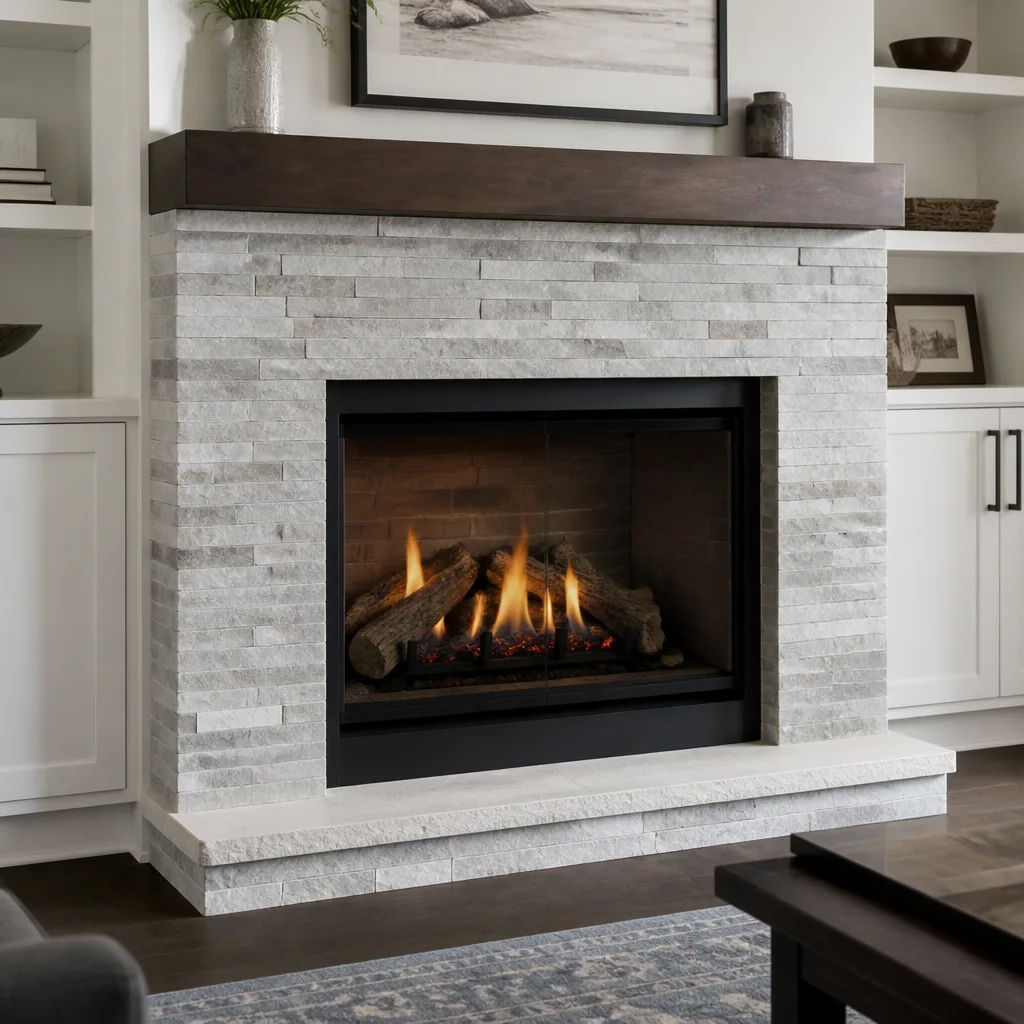 Gas fireplace service
Level 1 sweep and inspection to the NFPA 211 annual standard - flue, crown, cap, and flashing checked and photographed
Chimney sweep logs do not sweep chimneys. They loosen some creosote - which then falls where a brush and vacuum still have to collect it.
The Complete Guide to Chimney Cleaning in Hempstead
A standard Level 1 chimney inspection takes 45 to 60 minutes when done properly. If your last sweep was finished in under 20, at least one step was skipped. This guide explains exactly what a chimney cleaning in Hempstead should include, step by step, so you can verify the work before you sign anything. Knowing the job makes you a better client, not a harder one. By the time you finish reading, you’ll understand what the sweep is doing inside your flue, what should be left behind in writing, and why Hempstead’s coastal climate demands more attention than inland towns.
Quick Answer
Chimney cleaning in Hempstead involves removing creosote and soot from the flue liner, smoke chamber, damper, and firebox using brushes sized to your specific flue dimensions. A standard sweep in Nassau County typically costs $189 to $349 for a single flue, though the final price depends on the flue size, creosote stage, and whether an inspection is bundled. The process takes 45 to 90 minutes when performed correctly, and should always include an interior and exterior visual inspection plus a written condition report at the end.
Styles & brands we work with
Table of Contents
- What Actually Happens During a Chimney Cleaning
- The CSIA-Standard Cleaning Sequence, Phase by Phase
- What Your Sweep Should Leave Behind in Writing
- Hempstead-Specific Factors: Salt Air and Freeze-Thaw Cycles
- Cleaning vs. Cleaning-Plus-Inspection: What Each Costs and When Each Is Required
- How Often Should You Sweep a Chimney in Hempstead?
- Signs Your Chimney Needs Cleaning Now
- Common Mistakes to Avoid
- When to Call a Professional
- Frequently Asked Questions
What Actually Happens During a Chimney Cleaning
A chimney cleaning is not just running a brush up and down the flue. It’s a systematic process that removes combustible deposits, clears obstructions, and checks the structural condition of the entire venting system. When we perform a chimney sweep in Hempstead, we work through the system from the firebox upward, then from the crown downward, so nothing gets missed.
The goal is simple: remove enough creosote and soot that a chimney fire has no fuel, and carbon monoxide has no blockage in its path. Creosote is the tar-like residue that condenses on flue walls when wood smoke cools. It’s highly flammable. Soot is the softer, powdery carbon deposit. Both need to go. A chimney cleaning also removes obstructions like bird nests, fallen mortar, or leaves that can trap exhaust gases and push them back into the living space.
In Hempstead homes we see an extra layer of complication. Many chimneys here date from the 1940s through 1970s, and their clay tile liners have been exposed to decades of salt air. That matters because a brush moving through a deteriorated liner can do more harm than good if the sweep isn’t watching for cracked tiles. Part of a proper cleaning in this area is knowing when to stop and recommend repair instead of scrubbing a liner that won’t hold together.
The CSIA-Standard Cleaning Sequence, Phase by Phase
The Chimney Safety Institute of America sets the standard for what a proper sweep includes. Here is the sequence, in order, with the trade term first and a plain translation after.
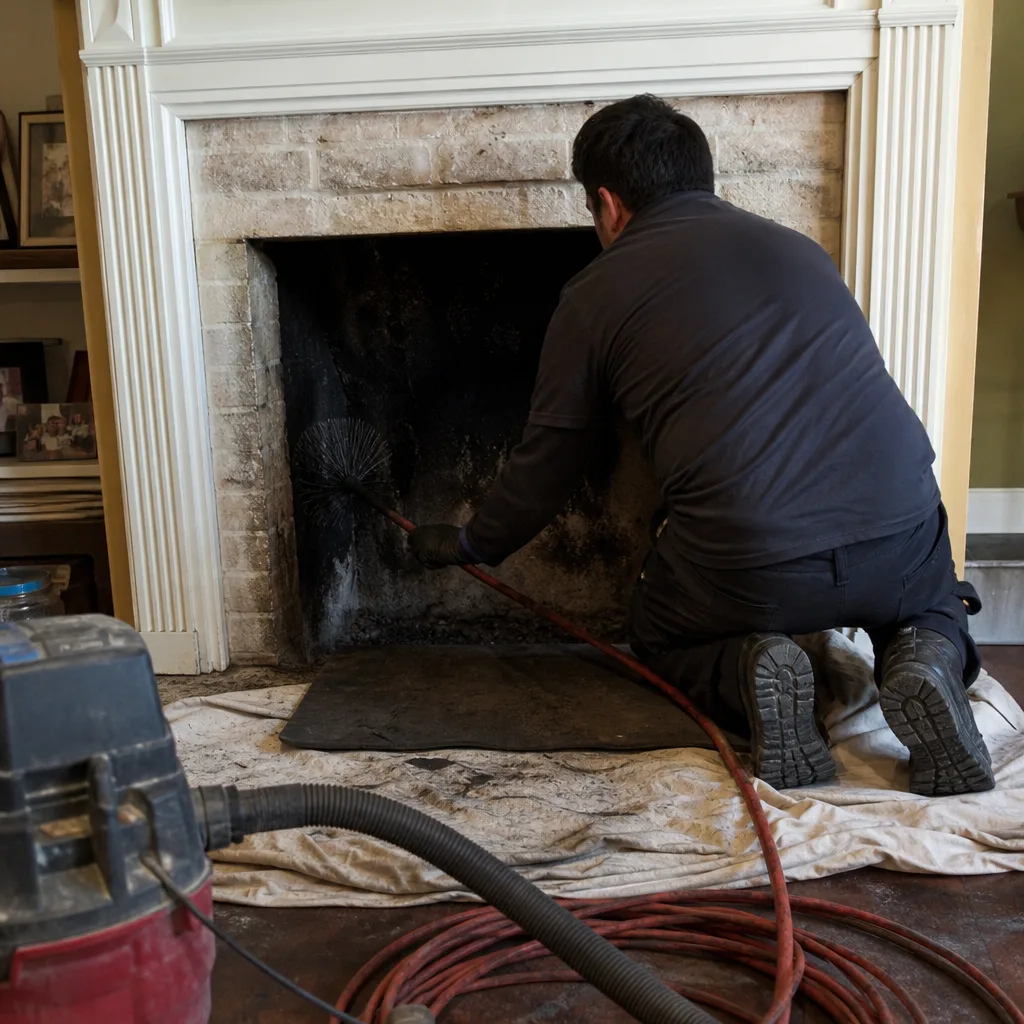
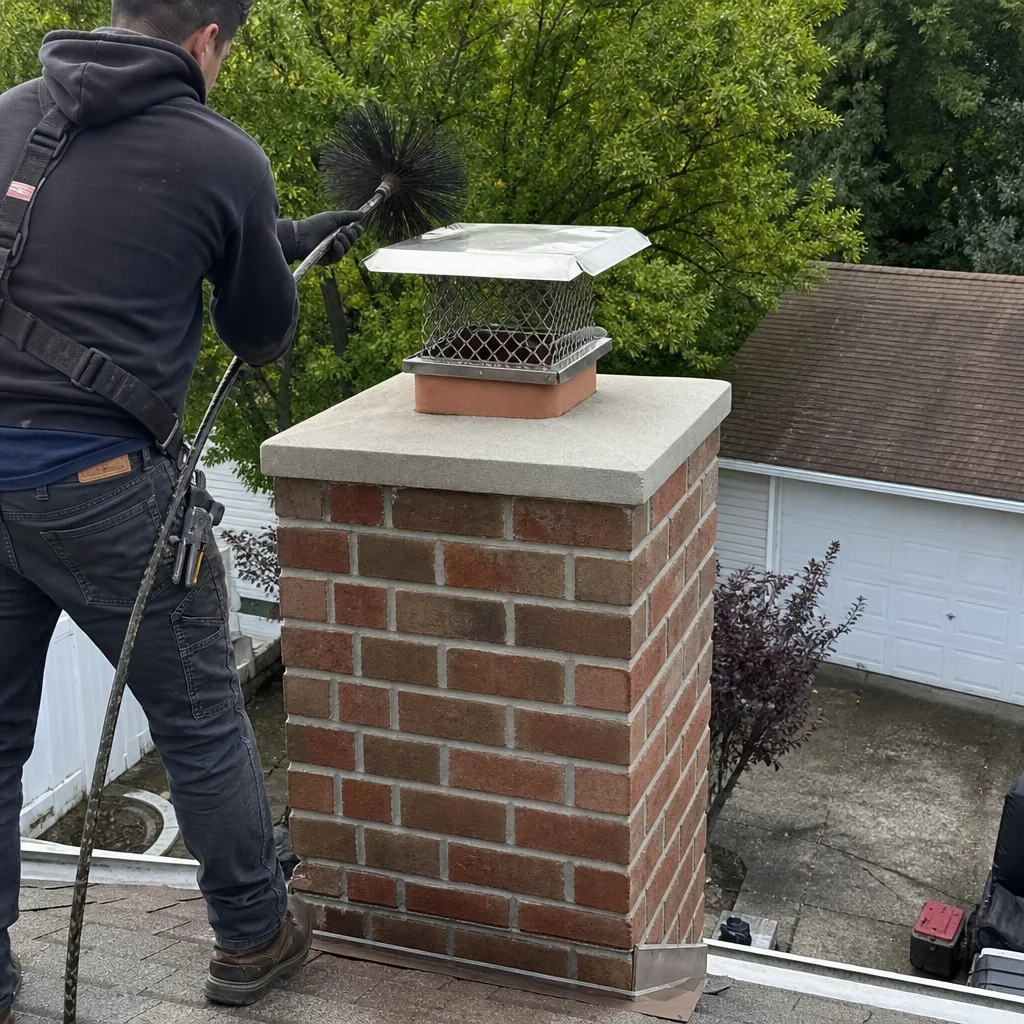
- Flue liner brushing (scrubbing the inner walls of the chimney): The sweep runs a wire or poly brush through the flue, sized to the exact dimensions of your liner. Round terra cotta liners take round brushes, rectangular liners take rectangular brushes, and stainless steel liners take poly brushes so the metal does not scratch. This removes the creosote and soot adhered to the walls.
- Smoke chamber brushing (cleaning the inverted funnel above the firebox): This is the most commonly skipped step. The smoke chamber is the angled area between the firebox and the flue. Creosote builds up heavily on its corbelled brick surfaces. A proper sweep uses specialized looped brushes to reach these angles. If your sweep never mentions the smoke chamber, ask why.
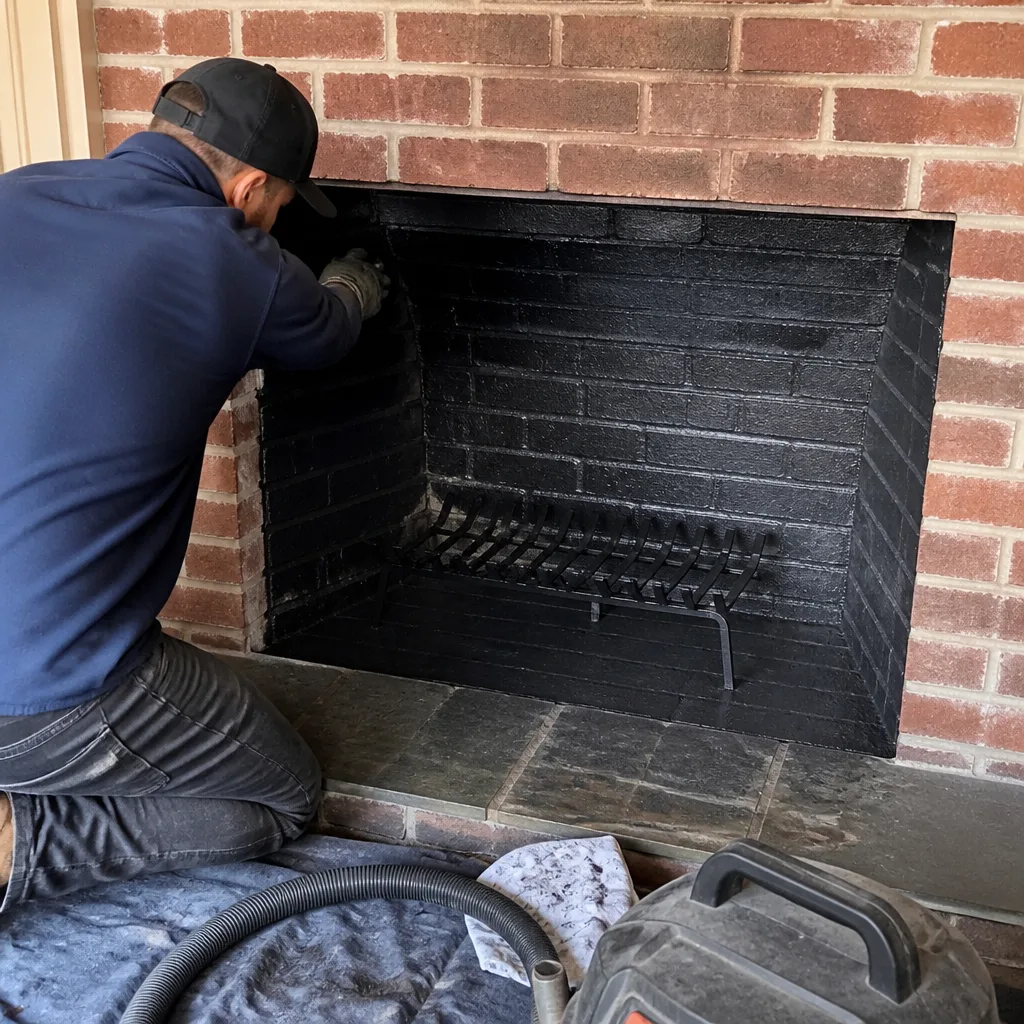
- Firebox vacuuming (removing ash and debris from the firebox floor): After the brushing is done, all loosened material falls into the firebox. The sweep vacuums every bit of it out using a high-powered HEPA-filtered vacuum. A standard shop vac will send fine ash back into your living room.
- Damper cleaning (clearing the metal plate that opens and closes the chimney): The damper is the cast-iron or steel door just above the firebox. Creosote and rust accumulate on it, and if it cannot fully open or close, your fireplace either smokes or drains heat. The sweep will clean it and test that it operates freely.
- Smoke shelf cleaning (clearing the flat ledge behind the damper): Debris naturally settles on the smoke shelf, which sits just behind and above the damper. If it’s not cleared, that debris can fall into the firebox or block airflow. This is another frequently skipped step because it’s awkward to reach.
- Flue liner inspection (checking the inner walls for cracks or gaps): After brushing, the sweep looks for damage the brush may have exposed: spalling brick, cracked clay tiles, or gaps between liner sections. In Hempstead, this step matters more than in most places, for reasons we’ll get to below.
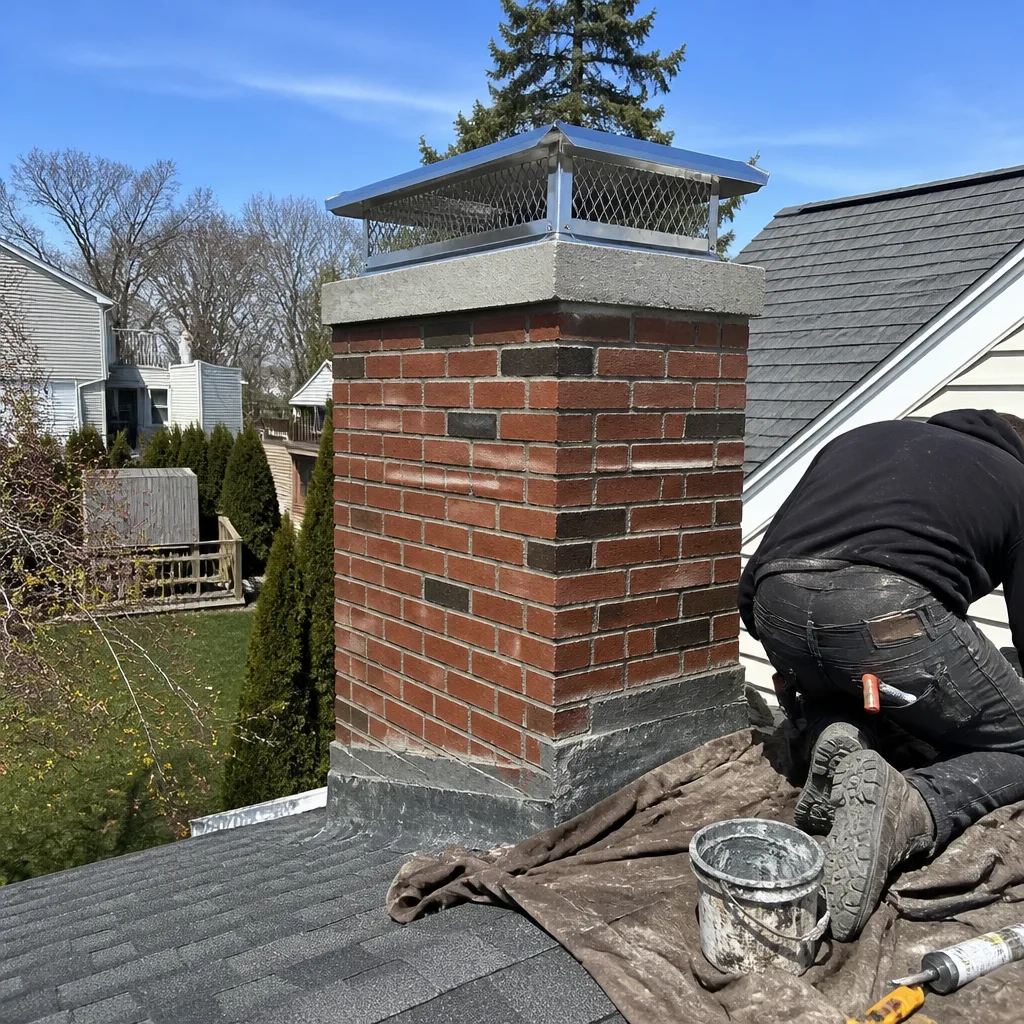
- Crown and cap check (examining the concrete top and rain cover from the roof): The crown is the concrete slab that seals the top of the chimney. The cap is the metal hood with mesh sides that keeps rain and animals out. Both get checked for cracks, rust, and blockages.
When all seven phases are completed, the cleaning is finished. If a sweep finishes in 20 minutes, something on this list was skipped, and in our experience it’s usually the smoke chamber or the smoke shelf. Those are the two most awkward and time-consuming phases, and they’re the two most likely to be skipped by someone rushing to the next job.
What Your Sweep Should Leave Behind in Writing
A receipt is not enough. Any legitimate chimney cleaning in Hempstead should end with a written condition report that describes what was found, what was done, and what the sweep recommends for the future. Verbal-only reports are a red flag, because a verbal summary is easy to forget, easy to misrepresent, and impossible to verify later. If something goes wrong six months down the line, you want the paper.
A proper condition report includes at least these items:
- The date of service and the technician’s name.
- The type of flue inspected: masonry with clay tiles, masonry with a stainless liner, or factory-built metal pipe.
- The size and shape of the flue, recorded for future reference.
- The stage of creosote found prior to cleaning: Stage 1 (powdery soot), Stage 2 (flaky tar), or Stage 3 (glazed, hardened deposits).
- Any obstructions found and removed.
- Any damage observed during the cleaning, such as cracked tiles, missing mortar joints, or a damaged crown.
- A recommendation for any repair, with a clear statement of urgency: do it now, do it before the next burning season, or monitor it.
- The written price for the work performed, matching the price approved before the job started.
This is the baseline we operate under at Flint Chimney Co Hempstead. Every job gets a written price before any tools come off the truck, and every job gets a written condition report before the technician leaves. We call this The Garrison Standard, the operating code every Garrison Partners company follows. It’s not complicated, but it’s not common, and it’s something you should hold any contractor to, whether you hire us or someone else.
Hempstead-Specific Factors: Salt Air and Freeze-Thaw Cycles
Hempstead sits close enough to the South Shore that salt air reaches the chimneys of homes in neighborhoods from Uniondale to East Meadow to Garden City South. That salt is not just an aesthetic issue. Salt air accelerates corrosion on metal components like dampers, caps, and chase tops, and it weakens mortar joints by penetrating the surface and expanding as it dries. We regularly see dampers in Hempstead homes rusted through after 15 years, where the same damper in a more inland town might last 25.
The bigger issue is freeze-thaw cycling. Hempstead winters routinely bring temperatures that swing above and below freezing within a single week. Water soaks into hairline cracks in the brick and mortar, freezes, expands, and slowly pries the masonry apart. Over ten or twenty winters, that process can turn a small crack into a missing brick. When a sweep brushes a flue in a chimney with this kind of damage, the brush can dislodge already-loosened mortar, which is why the flue inspection phase is so important here. We’ve found liners in Baldwin and Freeport homes that looked fine from the outside but crumbled when touched because freeze-thaw had quietly worked on them for decades.
This also means Hempstead homeowners should pay extra attention to their crown and cap. A cracked crown lets water run down the outside of the flue liner, where it freezes and expands. A damaged or missing cap lets rain, snow, and salt spray directly into the flue. The most common preventable damage we see in Hempstead is water damage that started with a cracked crown and went unnoticed for years because no one was checking it during their annual sweep.
What does this mean for you practically? It means a cleaning in Hempstead should never be just a brushing. The inspection component is not an upsell. It’s the difference between catching a $400 crown repair early and paying for a $4,000 liner replacement later. A chimney inspection in Hempstead that is bundled with a cleaning is the single most cost-effective maintenance decision a homeowner here can make.
Cleaning vs. Cleaning-Plus-Inspection: What Each Costs and When Each Is Required
These are two different visits with two different scopes. A cleaning removes deposits. A cleaning-plus-inspection removes deposits and evaluates the structural and functional condition of the entire chimney system. In Hempstead, a standard chimney cleaning runs $189 to $289 for a single flue in a masonry chimney with standard dimensions. A cleaning-plus-inspection runs $249 to $349, with the inspection portion covering the interior flue, the firebox, the smoke chamber, the exterior masonry, the crown, and the cap.
There are three levels of inspection defined by the National Fire Protection Association:
- Level 1: The baseline inspection done during routine maintenance. No special tools beyond a flashlight and the sweep’s eyes. Recommended annually when you’re not changing the system or using conditions.
- Level 2: A deeper inspection done when you’re buying or selling a home, after a chimney fire, after an earthquake or weather event, or when changing fuel type. This typically uses a camera to scan the flue interior and runs $299 to $499 in Hempstead.
- Level 3: An invasive inspection that requires removing parts of the chimney or building materials to access hidden areas. Only done when a Level 1 or Level 2 raises serious concerns. This is rare and priced per job.
Legally, there is no mandate in Hempstead or Nassau County that requires an annual chimney sweep. But there is a practical mandate in your homeowner’s insurance policy. Many Long Island insurers now ask about chimney maintenance history, and some exclude chimney fire damage if you cannot show a record of regular cleaning. If you burn wood more than twice a week during heating season, a Level 1 inspection with your annual sweep is the standard of care. Keep the condition report. It is your documented proof.
For homes with gas or oil heating systems venting through a chimney, the rules are different but no less important. An oil-fired furnace should have its flue checked annually for soot buildup from incomplete combustion. A gas furnace vents water vapor and carbon monoxide, and the flue needs to be checked for liner deterioration caused by that acidic moisture. In Hempstead, where many of the older homes converted from oil to gas decades ago, the existing clay liner was often not sized or rated for gas exhaust. We see these liners spalling and flaking from the inside. That’s why a specific chimney repair in Hempstead recommendation often follows what was booked as a simple cleaning.
How Often Should You Sweep a Chimney in Hempstead?
The old rule is once a year. The useful rule is: sweep your chimney whenever creosote reaches 1/8 inch of accumulation. But since most Hempstead homeowners are not lowering a camera into their flue to measure creosote, here’s the practical guidance.
- Wood-burning fireplace used weekly during winter: Sweep annually. In a Hempstead home near the water, where damp wood and slower starts produce smokier fires, consider checking at mid-season if you burn more than three fires a week.
- Wood-burning stove used as primary heat: Sweep at least annually, and some stoves benefit from a mid-season sweep in January. High-efficiency stoves burn hotter but can still build glaze-stage creosote in the connector pipe.
- Fireplace used occasionally (less than one fire per month): Sweep every two years, but get a Level 1 inspection annually. You’re not building creosote, but animals, leaves, and water damage don’t care how often you burn.
- Gas fireplace with a vented chimney: Inspect annually, sweep as needed. Gas produces no creosote but does produce acidic condensation that attacks liners. The inspection matters more than the sweeping here.
- Oil furnace venting through a masonry chimney: Sweep annually. Oil soot is fine and acidic, and it builds up quickly. A clogged oil flue is a carbon monoxide risk.
The honest answer for most Hempstead homeowners is once a year, ideally in late summer or early fall before burning season starts. August through October is our busiest window, and for good reason: it gives you time to address any damage found during the sweep before you need the fireplace. If you wait until November, you’re scheduling around holiday demand and freezing temperatures on the roof.
Signs Your Chimney Needs Cleaning Now
You do not need to wait for your scheduled sweep. Certain signs indicate the system needs attention immediately, and ignoring them is how small problems become expensive ones.
- Room fills with smoke when you light a fire: This can mean the flue is partially blocked, the damper is not opening fully, or the flue is restricted by creosote buildup. Do not burn until it is checked.
- A strong campfire smell when the fireplace is not in use: This is creosote off-gassing. In humid Hempstead summers, this smell is stronger because moisture activates the creosote’s odor. If you smell it, there is enough creosote in the flue to matter.
- A crackling or popping sound while burning: This is not always creosote igniting, but it can be. If the sound is persistent and the fire seems unusually energetic inside the chimney, stop burning and get an inspection before the next fire.
- Black flakes falling into the firebox: These are pieces of creosote breaking free from the flue walls. Where flakes are falling, glaze-stage creosote is usually above.
- Animals sounds or debris from the chimney: Birds, squirrels, and raccoons will nest in uncapped or damaged chimneys. Their nests are obstructions that can block exhaust and catch fire. Never try to smoke an animal out by lighting a fire.
Any one of these signs is enough to justify a service call. In our Hempstead service area, we tell homeowners with these symptoms to stop using the fireplace until a professional has looked at it. The call takes less than a minute, and the alternative is a chimney fire that can crack a liner and spread to the structure in minutes.
Common Mistakes to Avoid
- Hiring by phone quote alone: Any contractor who gives a firm price over the phone without seeing the chimney has not seen enough to quote accurately, or they plan to adjust the price at the door. In Hempstead, where flue sizes and liner conditions vary widely from house to house, a phone quote without a visit is a guess. Get the written price after the technician has looked at the actual chimney.
- Accepting a verbal-only report: If your sweep says everything looks fine but leaves you only a receipt, you have no record of what was actually checked. Condition reports exist for your protection and for future maintenance decisions. If a company refuses to provide one, that tells you something.
- Skipping the smoke chamber because the sweep quoted a lower price: The smoke chamber is where creosote builds most heavily, and it is the most common place for a chimney fire to start in a masonry chimney. A lower price that excludes it is not cheaper. It is incomplete work.
- Using chemical cleaning logs as a substitute for brushing: Creosote removal logs can loosen light soot, but they do not replace mechanical brushing. They never remove Stage 2 or Stage 3 creosote. They are a maintenance supplement, not a cleaning.
- Ignoring the exterior of the chimney: Hempstead’s weather works on the outside of a chimney just as hard as it works on the inside. Cracked crowns, missing mortar, and rusted caps let water in, and water is what turns a $250 sweep into a $3,500 liner job. Check the exterior from the ground after every rain-heavy season.
- Burning wet or unseasoned wood: Wet wood produces cooler, smokier fires, and that smoke condenses into creosote much faster. On Long Island, where humidity is high and wood piles sit outside, expect to season wood for at least 12 months before burning. Wood that hisses and sizzles is not ready.
When to Call a Professional
Chimney work is not a DIY project. The flue is a confined space, the roof work is genuinely dangerous, and the consequences of an improper repair include carbon monoxide poisoning and house fires. If you have a creosote buildup you can see or smell, a blockage, a water leak, a damaged cap or crown, or a fireplace that smokes back into the house, call a professional rather than improvising. The same applies if your inspection finds a deteriorated flue liner: that is a repair requiring specialized materials like HeatShield or a DuraFlex stainless liner, not caulk and hope. Flint Chimney Co Hempstead offers free estimates throughout Hempstead and the surrounding Nassau County communities. Call (516) 559-6922 to schedule a consultation, and you’ll get a written price before any work begins.
Frequently Asked Questions
A standard chimney sweep in Hempstead typically costs $189 to $289 for a single flue in a masonry chimney, with cleaning-plus-inspection packages running $249 to $349. The final price depends on the flue size, the creosote stage, and whether the roof access requires special equipment. Call (516) 559-6922 for an exact quote on your home. Estimates are free, and the price is written before work starts.
You need a new liner when the existing one has cracked tiles, missing mortar joints, or gaps that allow heat and exhaust to reach the surrounding masonry. In Hempstead, we often see clay liners that have deteriorated from decades of salt air and freeze-thaw cycling. If your sweep recommends a new liner, ask to see the camera footage or photos. Any reputable company will show you the evidence. A liner that shows only light surface staining can wait; a liner with structural cracks cannot.
A proper cleaning takes 45 to 90 minutes for a single flue, depending on the creosote stage and whether the roof access is straightforward. If a company finishes a standard cleaning in under 20 minutes, at least one phase was skipped, and it’s usually the smoke chamber or the smoke shelf. In our experience scheduling chimney sweeps in Hempstead, a two-story house with a steep roof adds time for safe ladder setup, but the interior work itself should never be rushed.
Creosote continues to accumulate until it either restricts the flue and pushes exhaust back into the house, or it ignites and becomes a chimney fire. Chimney fires burn hot enough to crack liners and ignite surrounding framing. In a covered repair scenario, the fire damage often exceeds $10,000. Even without a fire, a blocked or restricted flue can route carbon monoxide into the living space. The risk is real, and the annual cost of a sweep is a small fraction of any of these outcomes. Call (516) 559-6922 to schedule before burning season.
A gas fireplace does not produce creosote, but it does produce acidic condensation that corrodes clay liners over time. An annual Level 1 inspection is worth it for any gas fireplace in Hempstead, especially in homes that converted from oil to gas decades ago. The chimney inspection in Hempstead checks for liner deterioration and safe venting, which is a carbon monoxide concern in gas systems.
Look for a company that puts the price in writing before starting, leaves a written condition report after finishing, employs uniformed and background-checked technicians, and stands behind repairs with a written guarantee. We built Flint Chimney Co Hempstead under The Garrison Standard precisely because these practices are not universal. Check that whoever you hire will show you the evidence behind any repair recommendation.
The Bottom Line
Chimney cleaning in Hempstead is about more than brushing soot out of a flue. It’s about catching salt-air corrosion and freeze-thaw damage before they become structural failures, and it’s about having written documentation that the work was actually done. A proper cleaning includes the smoke chamber, the smoke shelf, the damper, and a flue inspection, and it ends with a condition report you can hold onto. If you only remember one thing from this guide, remember this: a sweep under 20 minutes skipped something. We’re here if you want the full job done the way it should be, with the price in writing before we start. Visit our Flint Chimney Co Hempstead home page to learn more about our services, or chimney repair in Hempstead if your last inspection flagged issues that need attention.
Written by Hank Delano, Owner at Flint Chimney Co Hempstead, serving Hempstead since 2002.
See the difference
 Before
 After
After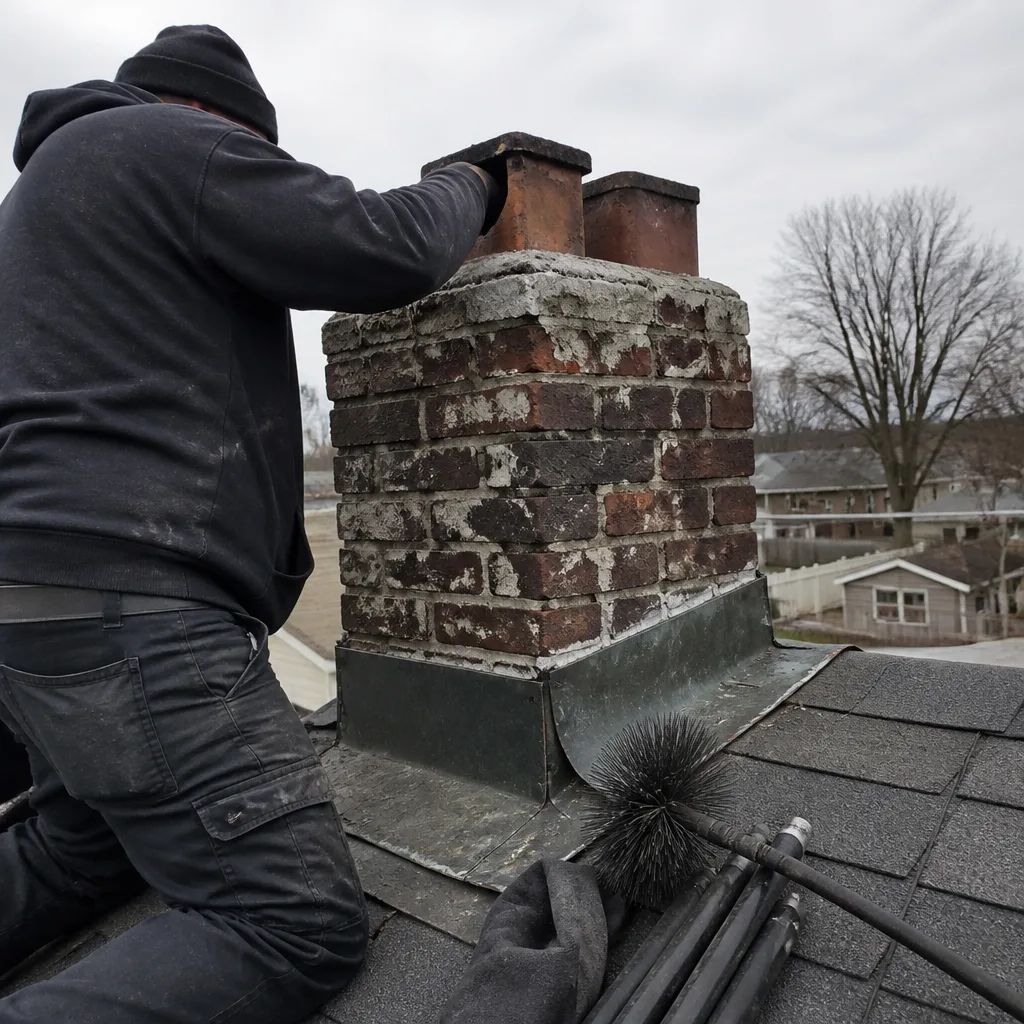 Before
 After
After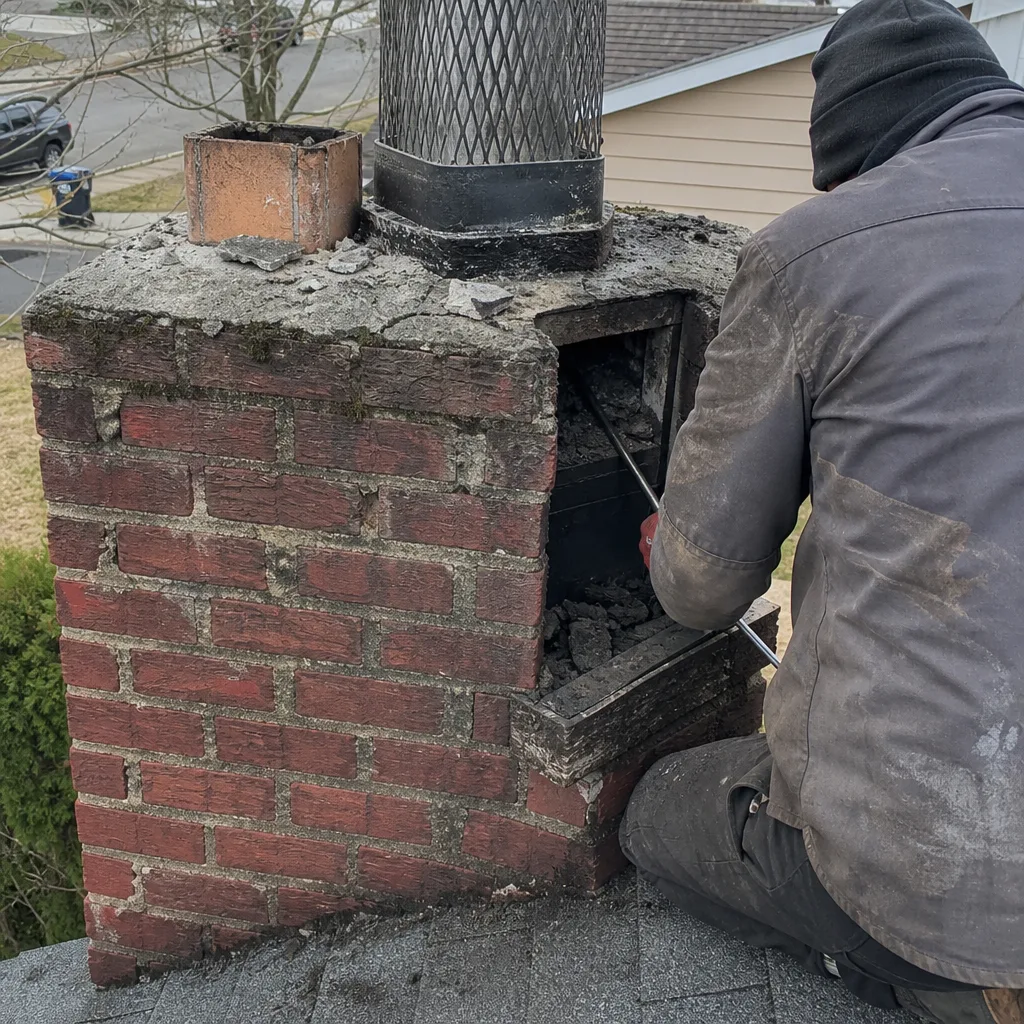 Before
 After
After