
Last updated October 15, 2026
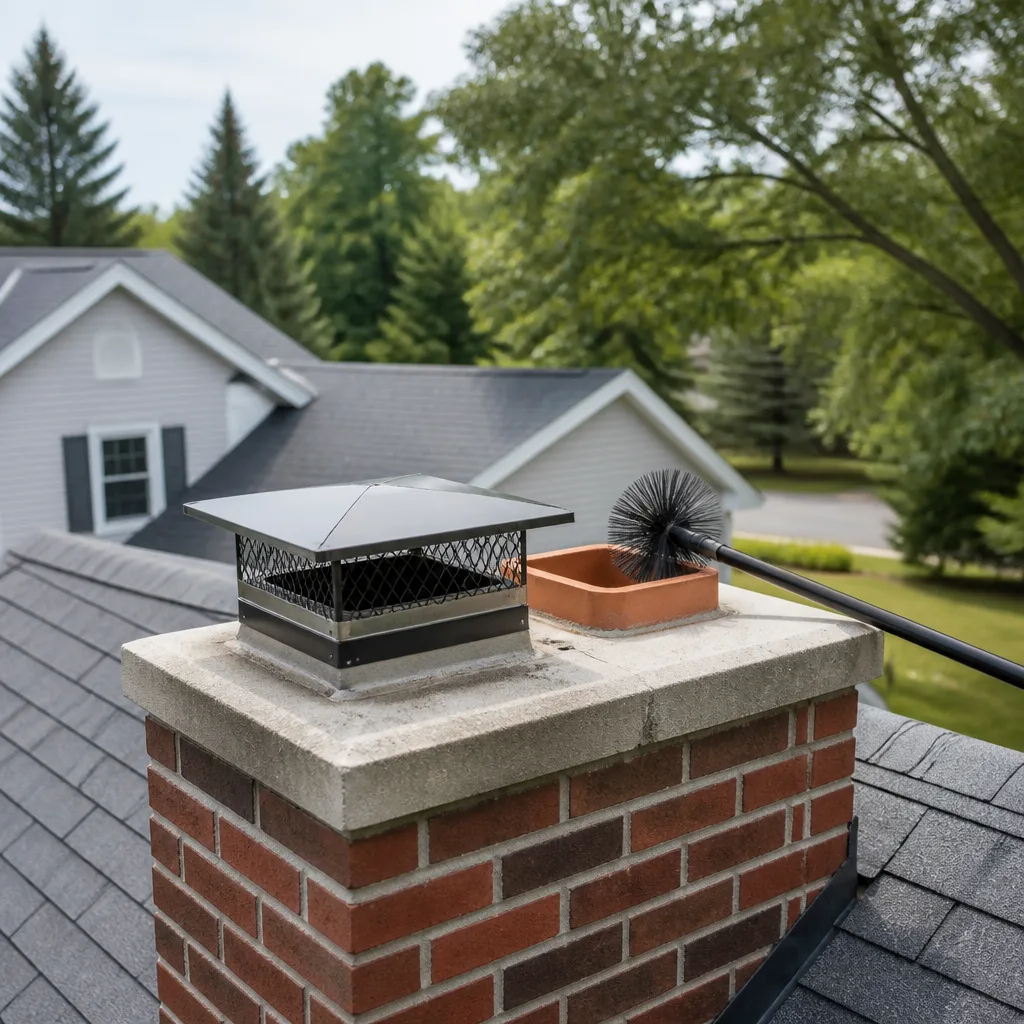 Sweep & inspection
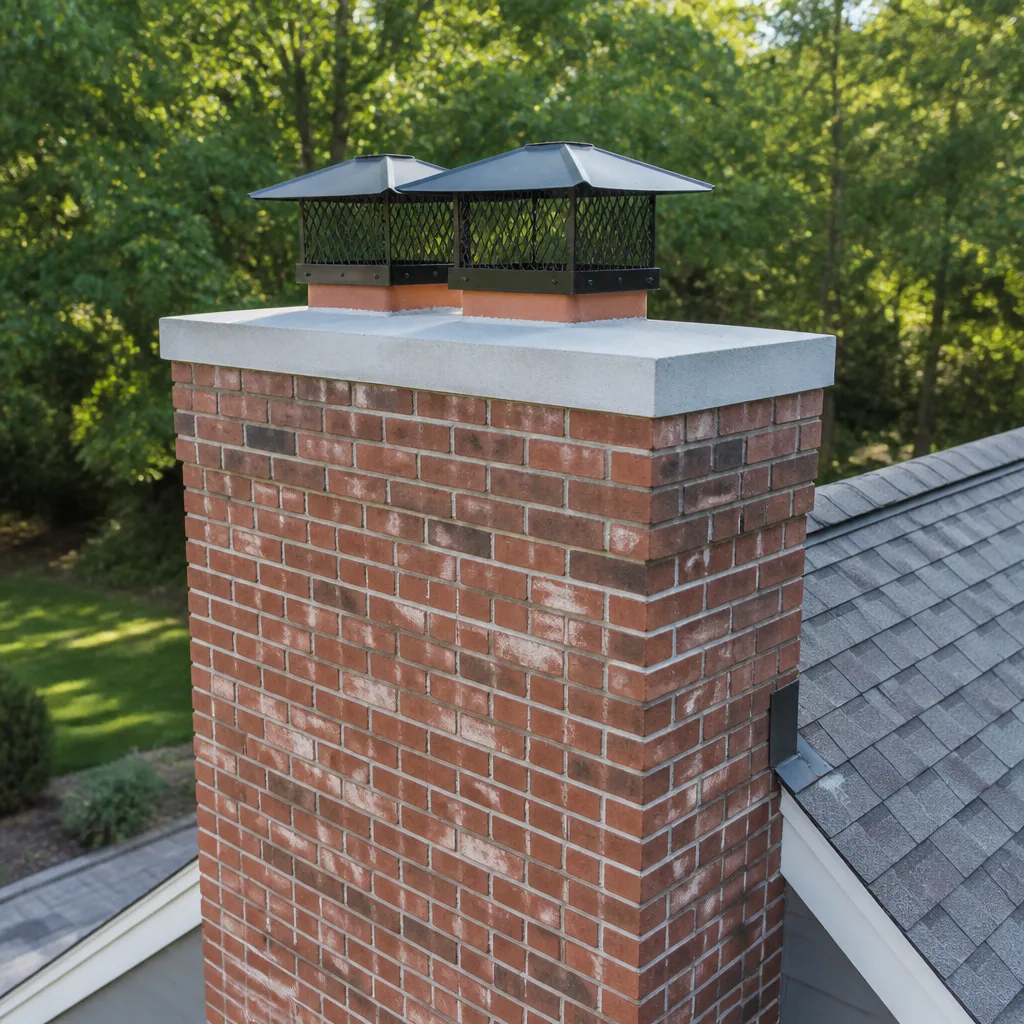 Caps & crowns
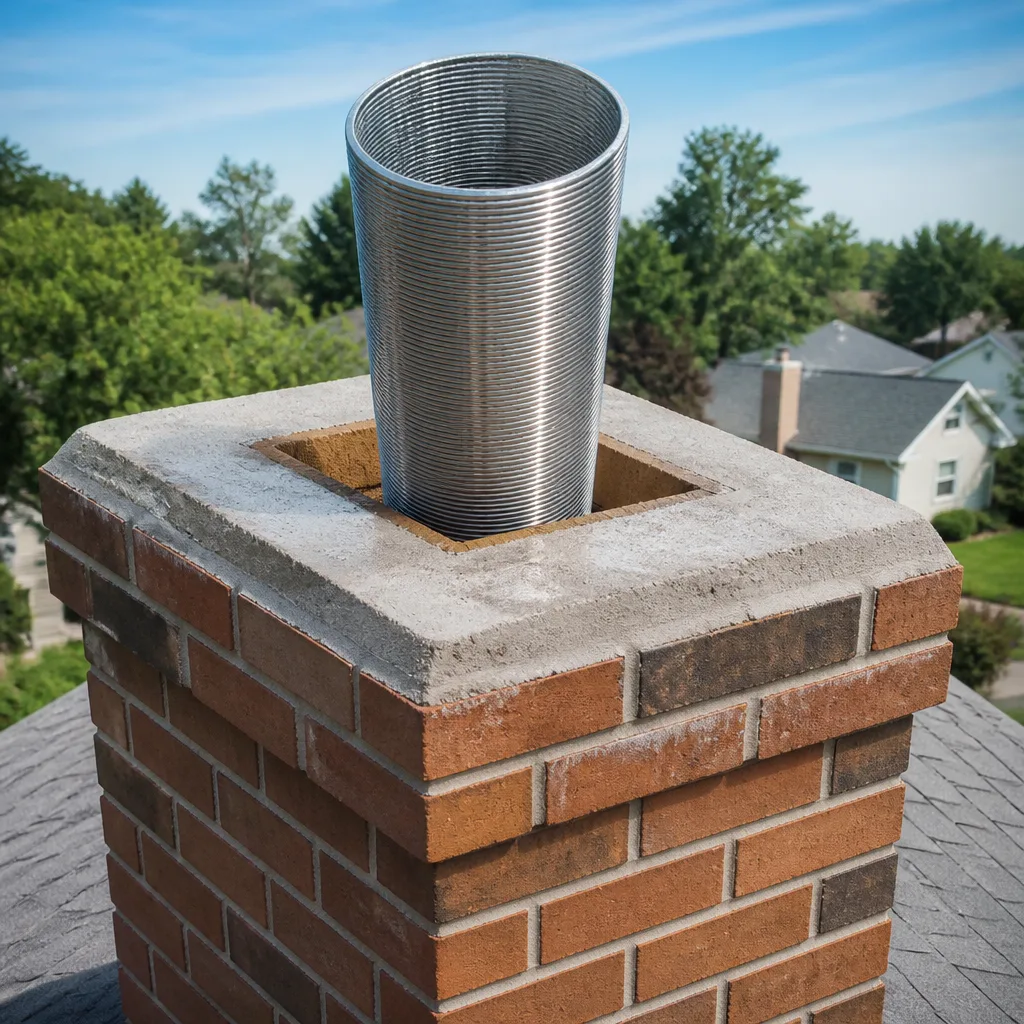 Flue relining
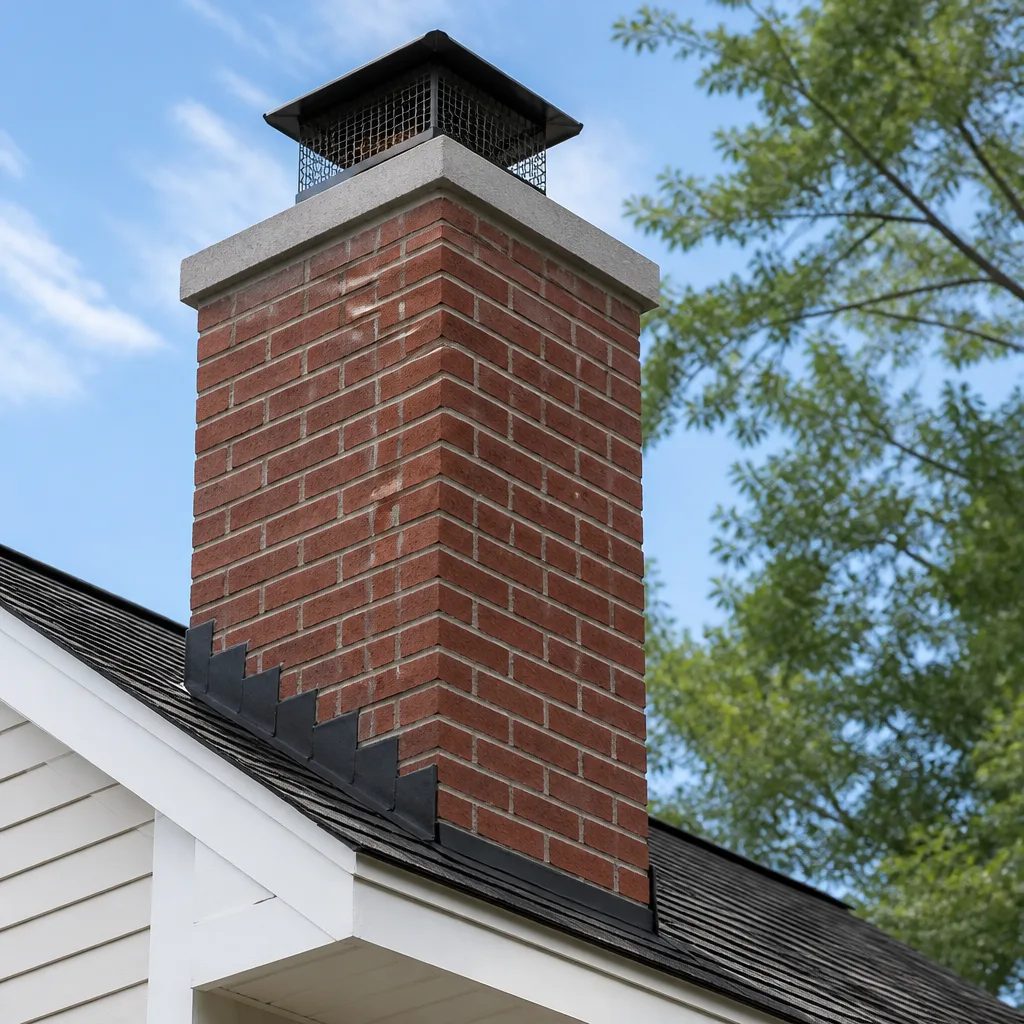 Masonry repair
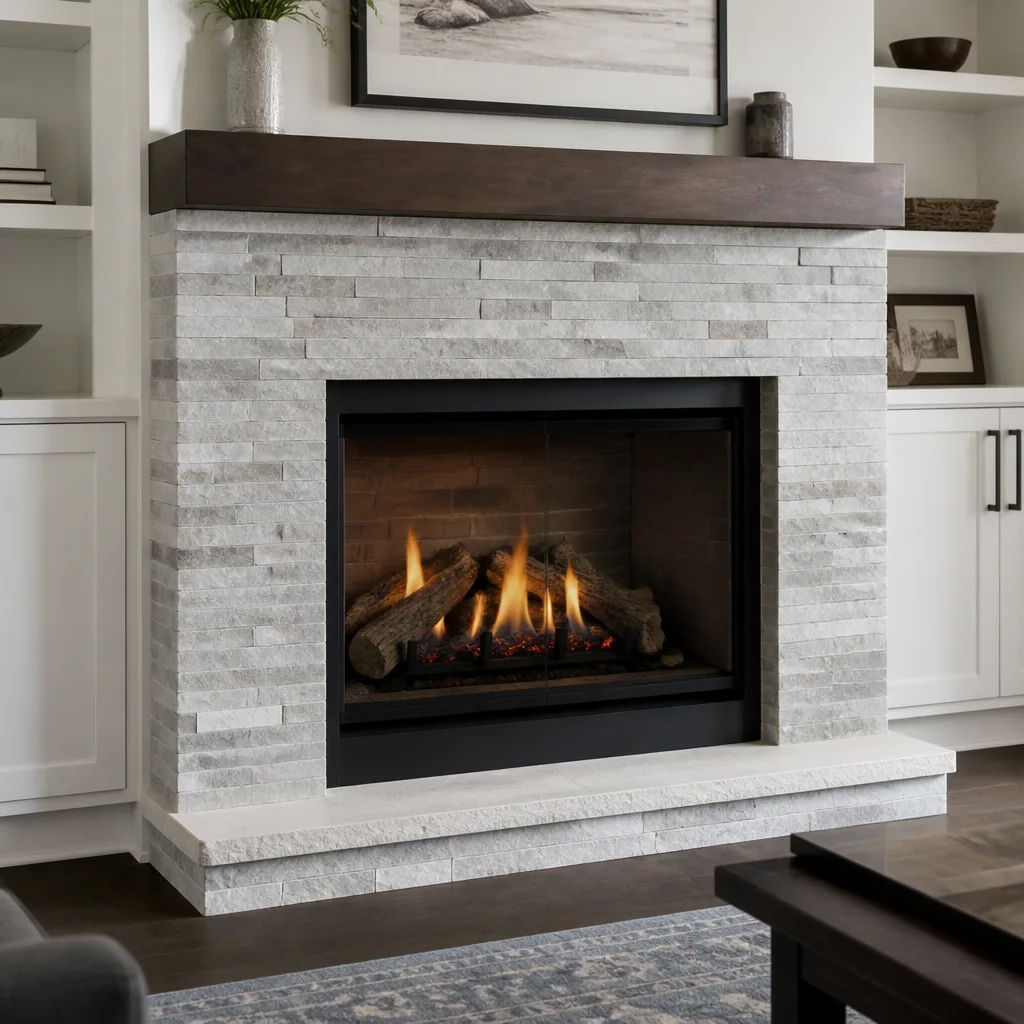 Gas fireplace service
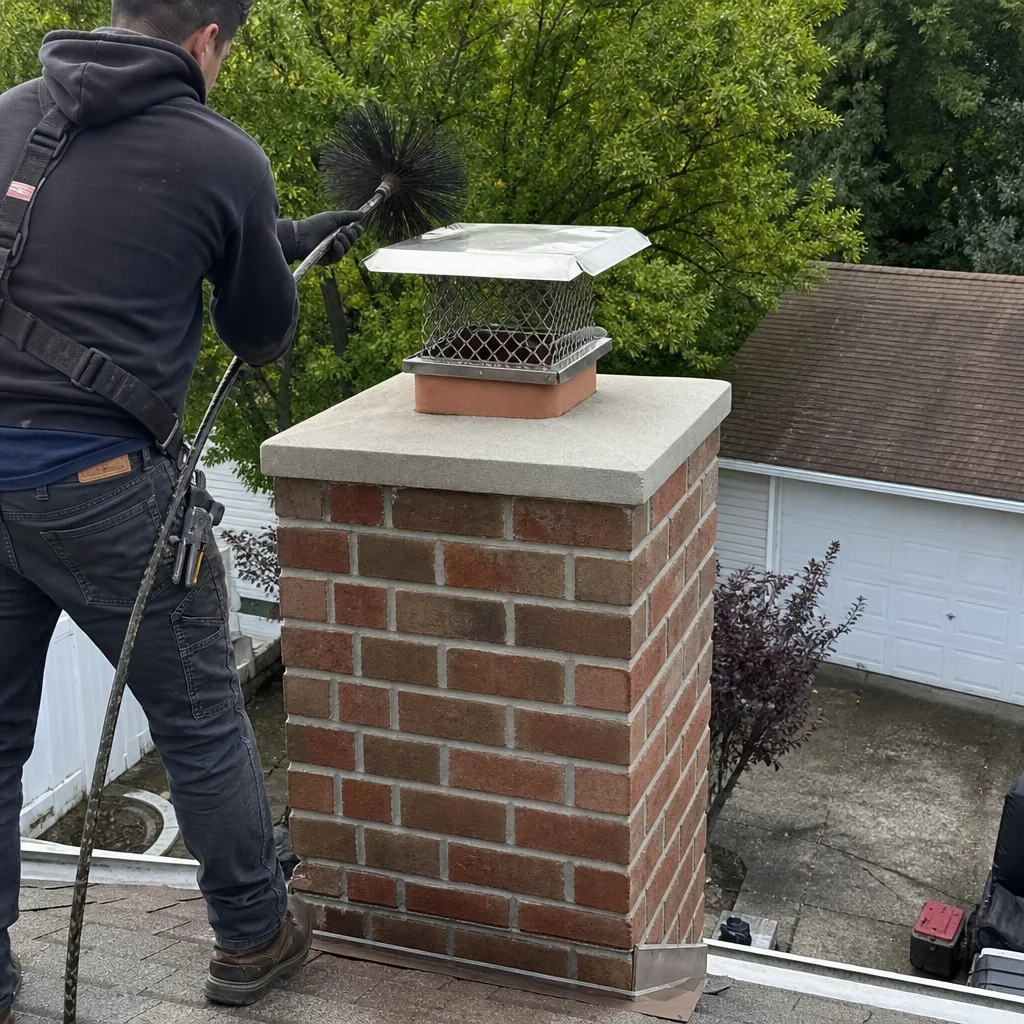
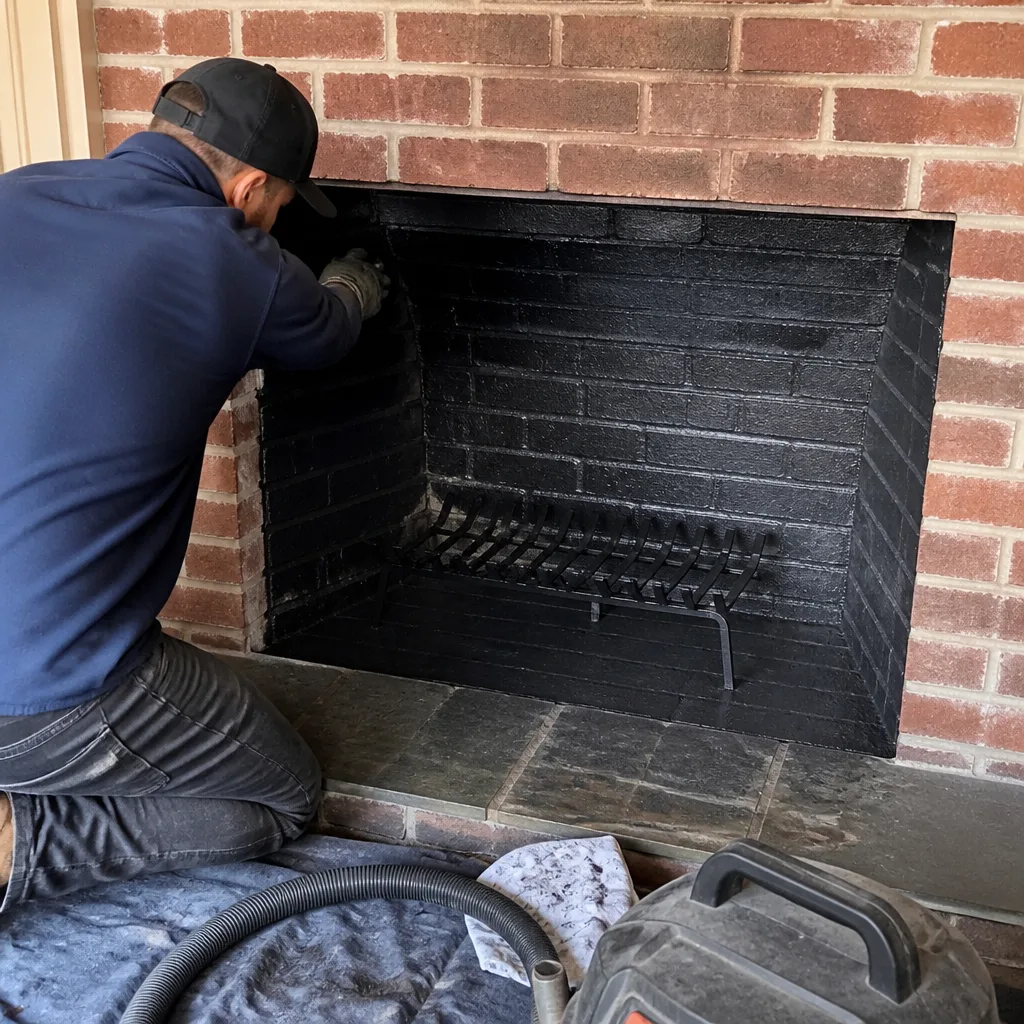
Level 1 sweep and inspection to the NFPA 211 annual standard - flue, crown, cap, and flashing checked and photographed
Chimney sweep logs do not sweep chimneys. They loosen some creosote - which then falls where a brush and vacuum still have to collect it.
Chimney Cleaning Warning Signs: A Hempstead Homeowner’s Reference Guide
White staining on your chimney’s exterior – called efflorescence – looks cosmetic. It’s actually your masonry telling you water has been moving through it long enough to carry dissolved salts to the surface. That process takes months, which means the interior damage is already ahead of what you can see. Most guides list symptoms. This one tells you what each symptom is physically caused by inside the flue, how urgent it is on a real timeline, and what the repair costs if you wait versus act now. If you heat with wood in Hempstead, this is your reference for the next decade.
Quick Answer
The warning signs that demand attention from a Hempstead homeowner are: smoke backing into the house, a strong campfire-like smell even when the fireplace is cold, visible white or dark staining on interior or exterior masonry, flaking brick or mortar, a chimney cap that’s missing or dented, and creosote buildup thicker than 1/8 inch. If you see any of these, schedule a Chimney Inspection in Hempstead before burning again. A standard chimney sweep in Nassau County typically runs $229 – $389, while ignoring the warning signs can lead to repairs costing $1,000 to $9,000 depending on what’s actually failing inside.
Table of Contents
- Efflorescence: The White Stain That Says Water Is Winning
- Smoke Smell in the House: Three Causes, Three Different Fixes
- Creosote You Can See: The 1/8-Inch Rule
- Draft Problems and Downdraft: Hempstead Wind Conditions Explained
- Cracked Chimney Crown and Spalling Brick: Ground-Level Warnings
- What Only a Sweep Can See: Glazed Creosote and Spalled Liner Tiles
- What To Do When You Spot a Warning Sign: A Decision Tree
- Nassau County Repair Costs: Act Now vs. Wait
1. Efflorescence: The White Stain That Says Water Is Winning
Efflorescence is not mold, not salt from the sea air, and not something you can fix with a wire brush. It’s dissolved minerals deposited on the surface of brick or stone when water seeps into your chimney, dissolves the salts naturally present in mortar, and then evaporates through the face of the masonry. The water travels in, picks up salts, moves outward, and leaves the salts behind as a white or grayish crust. Here’s what matters: that process took months. Your chimney has been wet inside for at least a season, and possibly longer, before you ever saw the stain.
In Hempstead, the freeze-thaw cycles from late November through March accelerate the damage. Water that has saturated mortar freezes, expands by about 9%, and cracks the joints from the inside out. Nassau County winters don’t need to be brutal for this to happen – repeated dips below 32°F are enough. A chimney with efflorescence heading into a Hempstead winter is a chimney that will look worse in April.
What it means
- Hazard level: Informational, but time-sensitive. The chimney is not about to collapse, but water entry is ongoing.
- Likely causes: Failed or missing chimney cap, cracked crown, deteriorating flashing at the roofline, or porous brick that was never sealed.
- Associated repair in Nassau County: Depending on the root cause, $450 – $1,800 for a proper crown repair and cap replacement, or $2,500 – $7,000 if the flashing and water-damaged interior need work.
We’ve swept chimneys in Hempstead homes where the homeowner called us for a simple cleaning and the white stain on the outside led to a camera inspection that found a flue liner rotted half through. The exterior stain is the messenger, not the whole story. A Chimney Inspection in Hempstead with a camera will show what the water has been doing inside.
2. Smoke Smell in the House: Three Causes, Three Different Fixes
A cold fireplace that still smells like last February’s fires is a warning sign people often dismiss as normal. It’s not. That odor means the chimney is pushing air into your living space instead of carrying it up and out, and that air is carrying the byproducts of burned wood with it. There are exactly three reasons this happens, and each one requires a different response.
Cause 1: Creosote buildup
Creosote is the tar-like residue that condenses inside the flue as smoke cools on its way up. It has a sharp, acrid, campfire-on-steroids smell. When it builds to a meaningful thickness, the smell can push into the house even with the damper closed. The fix here is straightforward: a professional Chimney Sweep in Hempstead removes the creosote, and the smell typically dissipates within a day or two. In Hempstead’s humid summers, creosote absorbs moisture and gets noticeably smellier – we get calls every July and August from homeowners who walked past the fireplace and thought something had died in the flue. It’s usually creosote plus humidity.
Cause 2: Negative air pressure
Exhaust fans, a running clothes dryer, a bathroom fan, even a furnace pulling combustion air – any of these can create negative pressure in the house that pulls air down the chimney rather than letting it rise. If the smell comes and goes depending on what appliances are running, this is likely your issue. The fix might be as simple as opening a window slightly before lighting a fire, or it might involve a damper modification. It is not, on its own, a reason to reline the chimney. We’ll say that plainly.
Cause 3: Water-damaged creosote or failed liner
If water has been entering the flue, creosote gets wet, and wet creosote releases an odor that is uniquely sour and persistent. A cracked or spalled flue liner can also trap odor and allow it to seep through masonry into the house. This one requires a camera inspection to diagnose. The associated repair – flue relining, which means replacing the inner liner that channels smoke safely out of the house – runs $4,500 – $9,000 in Nassau County depending on flue length and access. Do not let anyone quote you that job without showing you the camera footage.
3. Creosote You Can See: The 1/8-Inch Rule
Creosote forms in three stages. Stage one is a flaky dust that brushes off easily. Stage two is a granular, crunchy deposit that looks like coffee grounds glued to the flue wall. Stage three is glazed creosote – a hard, shiny, tar-like coating that is extremely difficult to remove and extremely flammable. The industry standard is straightforward: if creosote buildup is 1/8 inch thick or more, the chimney needs to be swept before the next fire. That’s not our rule; it’s the standard published by the National Fire Protection Association and followed by qualified sweeps across the country.
You cannot accurately assess creosote thickness by looking up from your living room with a flashlight. The angle hides the upper flue, and the important buildup is often above the damper, where you can’t see it without a mirror or a camera. A first-degree creosote layer of flaky dust is a maintenance item. A second-degree buildup means the chimney is running too cool – likely from burning unseasoned wood or a flue that’s oversized for the fireplace. A third-degree glazed layer is a fire waiting on the right conditions: hot fire, adequate oxygen, and a spark reaching that fuel.
In our experience in Hempstead, homes built in the 1960s and 1970s often have flues sized for open fireplaces that are rarely burned hot enough to keep creosote condensation down. If you burn mostly in December through February with occasional small fires, understand that those low, slow burns produce more creosote per cord than hot, active ones.
4. Draft Problems and Downdraft: Hempstead Wind Conditions Explained
A chimney that won’t draw properly announces itself with smoke spilling into the room when you light a fire, or a cold draft coming down the flue when the fireplace isn’t in use. In Hempstead, the prevailing wind and the way homes are situated against each other play a real role. The town’s housing stock – a dense mix of colonials, capes, and split-levels – means that wind wraps around neighboring structures and hits chimneys from angles a freestanding house would never experience. Wind coming over your roofline or around a neighbor’s taller house can create a downdraft that forces smoke back down the flue.
Pressure problem or structural problem?
The first question is whether the house has negative pressure. Run the test: with the fireplace cold and the damper open, turn on the dryer, the bathroom fans, and the kitchen exhaust. Hold a lit stick of incense near the fireplace opening. If smoke pulls into the room, the house is in negative pressure, and the chimney is actually ventilating air into the house. That’s a pressure problem, and the fix is often manageable – closing the damper when not burning, opening a window a crack during fires, or installing a top-sealing damper designed for tighter houses.
If pressure is not the issue and the chimney still won’t draw, the cause is usually physical: insufficient flue height, an oversized flue for the fireplace opening, or a blockage. The rule of thumb for adequate draft is that the chimney must extend at least 3 feet above the roof penetration and at least 2 feet above anything within 10 feet of it. In Hempstead, where chimney height was frequently dictated by 60-year-old roof lines, a chimney that’s too short for the roof pitch is not uncommon. A smoke test and a draft measurement tell us which one is actually happening before anyone spends money on a fix.
5. Cracked Chimney Crown and Spalling Brick: Ground-Level Warnings
From the ground, without any equipment, the warning signs you can actually see fall into three categories: the crown, the cap, and the masonry.
The crown is the concrete or mortar slab at the very top of the chimney that sheds water away from the flue. A properly built crown slopes outward and overhangs the brick by at least two inches. What we see on Hempstead chimneys, especially those from the 1970s and earlier, is a flat mortar crown with no overhang and hairline cracks running through it. Those cracks admit water directly into the masonry below. The fix is a poured, properly sloped crown replacement, typically $900 – $2,400 in Nassau County depending on access. If the chimney is tall or the roof angle steep, the cost rises with safety equipment and setup time.
The cap is the metal lid that sits over the flue opening, keeping rain, leaves, and animals out. A missing or badly rusted cap on a Hempstead chimney means every storm sends water straight down the flue. The fix is inexpensive relative to the damage it prevents: a proper stainless steel cap installed runs $250 – $550. We spec Flint Chimney Co Hempstead home replacements with a cap that carries a written guarantee against rust-through, because a cap that rusts out in two years isn’t a bargain.
Spalling brick – brick with the face flaking off, leaving the softer, porous interior exposed – is the most visibly alarming ground-level sign. It means water has saturated the brick, frozen, and broken the surface. By the time you see flakes of brick on your roof or on the ground beside the chimney, the process has been ongoing for years. At that point the structural question is real: a Chimney Repair in Hempstead often requires rebuilding the affected section, which ranges from $1,500 for spot repointing to $8,000 or more for a partial rebuild from the roofline up.
6. What Only a Sweep Can See: Glazed Creosote and Spalled Liner Tiles
Here’s the uncomfortable truth: a meaningful percentage of Hempstead chimneys that look fine from the ground are compromised inside where nobody has looked. These are not DIY-detectable problems, which is why an inspection matters even when nothing appears wrong.
Glazed creosote, the stage-three deposit, cannot be seen without getting eyes or a camera into the flue. It looks like black glass melted onto the flue wall. Normal brushing won’t remove it; removal requires specialized chemical treatment and mechanical methods. If it’s present in volume, the fire risk is severe. A chimney with heavy glazed creosote is a do-not-use situation until it’s cleaned. In our experience, glazed creosote shows up most often in Hempstead homes where the previous owner burned a lot of pine or construction scrap, or where the fireplace was used infrequently enough that creosote kept building in layers without ever burning off.
Spalled liner tiles are clay flue tiles that have cracked and shed pieces due to thermal stress or water damage. The warning signs from inside the house are often subtle: a trickle of fine, sandy debris in the firebox after a storm, a tile fragment on the smoke shelf during cleaning, or a smoke smell that nothing seems to resolve. If a clay tile liner has spalled, the chimney is no longer safely containing combustion gases and heat. A camera inspection shows exactly where the damage is and how extensive it is. When we recommend flue relining in Hempstead, we show the homeowner the footage and point to the specific problem areas. If a company quotes a new liner without camera work, get a second opinion.
7. What To Do When You Spot a Warning Sign: A Decision Tree
Here’s a practical, step-by-step sequence for responding to what you’ve found. Follow it in order.
- Stop burning. If you see smoke backing up, smell smoke when the fireplace is cold, or notice visible creosote thicker than 1/8 inch, do not light another fire until the issue is diagnosed. A chimney fire is not worth the gamble.
- Document what you see. Take photos of exterior staining, cracked masonry, a missing cap, or any debris in the firebox. These photos are useful when speaking with a sweep and as a baseline for comparison after any repair.
- Run the pressure test. If draft problems are your main symptom, do the incense test described above with exhaust appliances running. This tells you whether you might have a pressure problem before anyone charges you for a diagnosis.
- Get a camera inspection. Any recommendation for relining, crown replacement, or major masonry repair should be backed by camera footage you have personally reviewed. We use camera inspection as standard practice for Chimney Inspection in Hempstead because recommendations without visual evidence don’t serve the homeowner.
- Get the price in writing before work starts. Every job Flint Chimney Co Hempstead performs gets a written price before any work begins. That’s The Garrison Standard, and it applies to every service call. The number you approve is the number on the invoice.
- Schedule the work. In Hempstead, the sensible window for routine sweeping is spring through early fall, before the burning season. Repairs that involve masonry or crown work should ideally be completed before the first hard freeze.
8. Nassau County Repair Costs: Act Now vs. Wait
Money is the honest motivator. Here’s what Hempstead homeowners can expect to pay for chimneys at various stages of neglect, based on Nassau County market rates.
| Condition | Hazard Level | Cost to Address Now | Cost if Ignored 2 – 5 Years |
|---|---|---|---|
| Routine creosote buildup, no damage | Maintenance item | $229 – $389 for a professional sweep | Same cost, but fire risk rising each season |
| Missing or damaged chimney cap | Informational | $250 – $550 installed | Water entry leading to $1,500 – $4,500 in liner or crown damage |
| Cracked crown | Informational, progressive | $900 – $2,400 for proper replacement | Freeze-thaw damage extending into masonry: $3,500 – $8,000 |
| Efflorescence with interior moisture | Informational to urgent | $450 – $1,800 depending on source | Full water remediation plus liner replacement: $5,000 – $9,000 |
| Stage-two creosote, no glazing | Do not use until swept | $229 – $389 for sweep plus any minor adjustments | Chimney fire risk: potential for $10,000+ in fire damage |
| Glazed creosote, stage three | Do not use until treated | $400 – $900 for chemical and mechanical removal | Active chimney fire risk; flue interior can crack under intense heat |
| Spalled liner tiles confirmed by camera | Urgent | $4,500 – $9,000 for flue relining with professional-grade materials | Combustion gas leakage into the house; full rebuild costs exceeding $12,000 |
These are the numbers we quote in Hempstead, and we quote them before any work starts. A chimney sweep in Nassau County is typically $229 – $389 for a standard open fireplace, with the lower end applying to single-story chimneys in good condition and the higher end to two-story flues, heavier creosote, or hard-to-access roofs. When we use the word “typically,” we mean exactly that – the written quote on your job is what governs, and you’ll have it before our techs touch a tool.
Styles & brands we work with
Common Mistakes to Avoid
- Burning a “hot fire” to burn off creosote. This is a fire hazard, not a maintenance strategy. Creosote needs to be mechanically removed. A hot fire can ignite existing creosote, and then you have a chimney fire on your hands.
- Painting over efflorescence. Paint traps moisture inside the brick and accelerates the damage. The stain always returns worse, and now the masonry is sealed against proper drying. Fix the water source first.
- Closing the damper and forgetting the chimney. A closed damper stops some drafts but does nothing for water entry through a bad crown or missing cap. Water doesn’t care about your damper.
- Accepting a relining quote without seeing camera footage. In the Hempstead market, legitimate sweeps show you the damage. If a company won’t, you’re being quoted on a problem that may not exist, or on work that’s incomplete.
- Assuming a chimney that works “fine” doesn’t need sweeping. Chimneys don’t send a warning calendar invite before a fire starts. The creosote thickness standard exists because fires happen without any preceding smoke smell or draft problem.
- Replacing a cap with whatever the hardware store sells. Generic caps often fit poorly and rust through fast. We replace caps with professional-grade stainless units sourced from brands like Olympia Chimney and Gelco, selected for the flue size, not the price tag.
- Ignoring a smoke smell because “the damper is closed.” If the smell is reaching your living room with the damper closed, the flue has an airflow path that should not be there. That warrants inspection, not air freshener.
See the difference
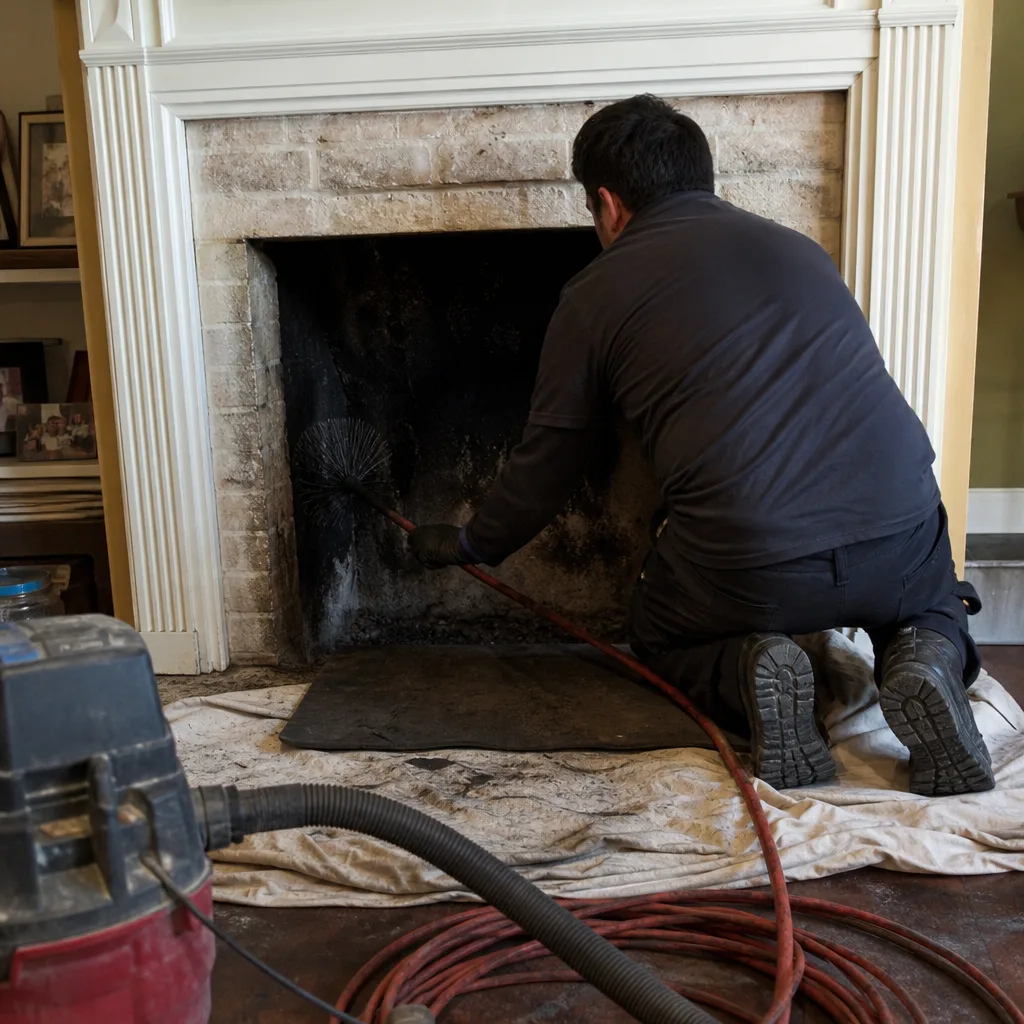 Before
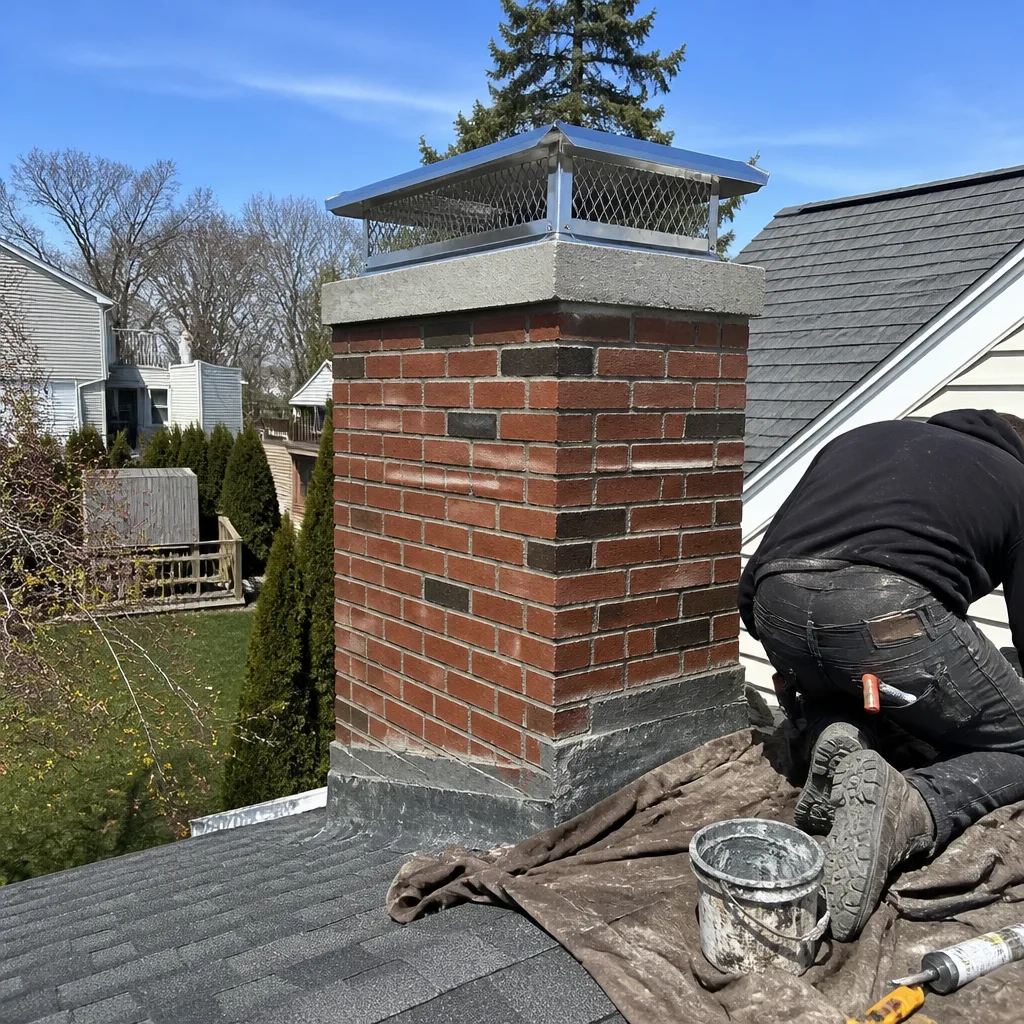 After
After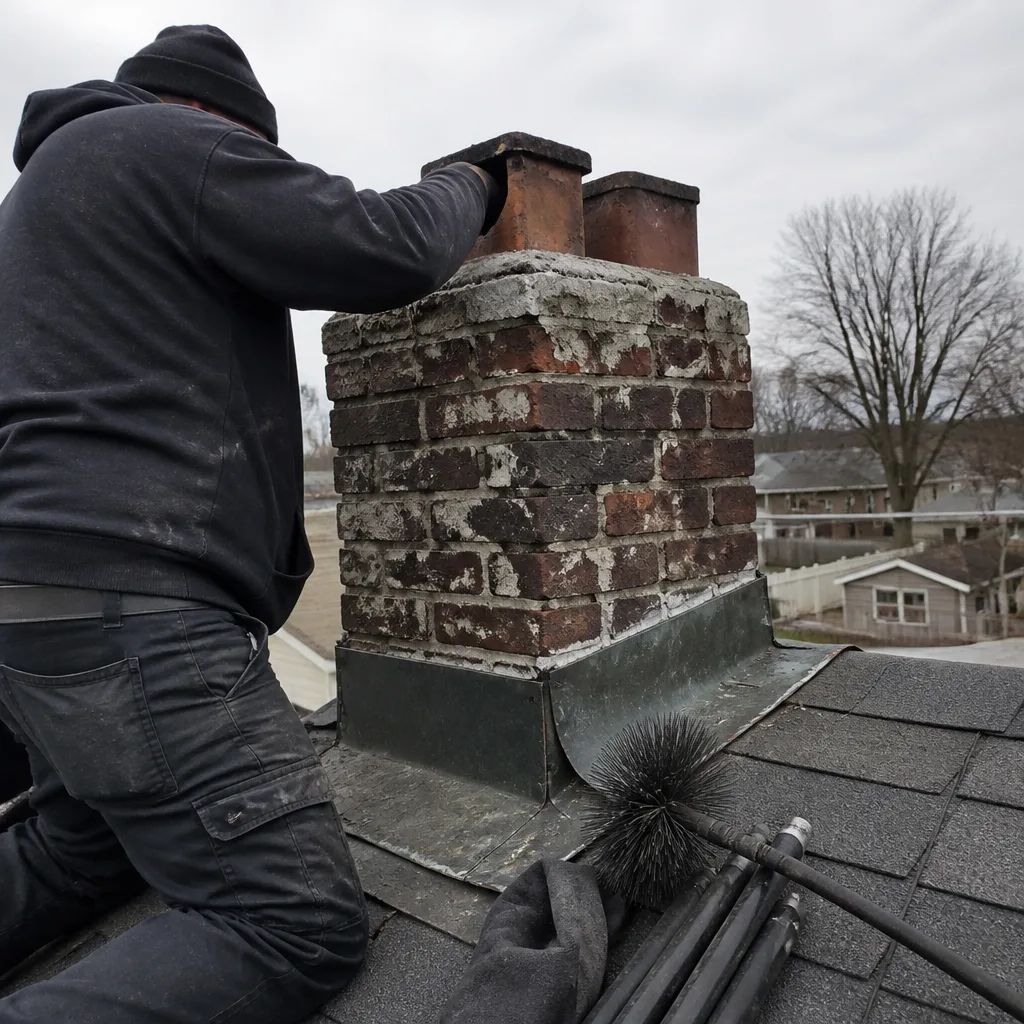 Before
 After
After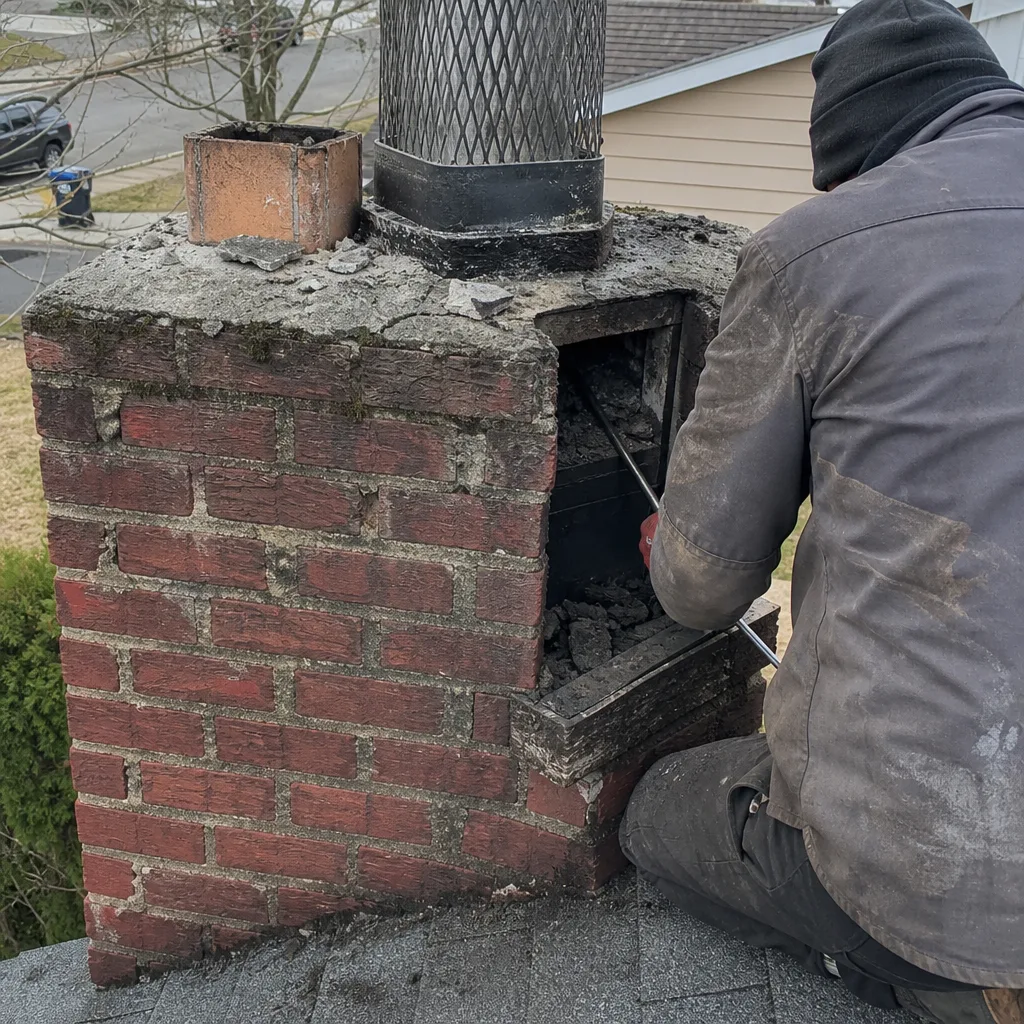 Before
 After
AfterWhen to Call a Professional
Call a chimney professional when you see white staining, cracking masonry, a missing cap, or when you smell smoke with no fire burning. Call immediately if smoke enters the room during a fire, if you see flames or a very hot glow inside the flue, or if debris from the chimney is falling into the firebox. These are not normal and not worth troubleshooting on a forum. Flint Chimney Co Hempstead offers free estimates in Hempstead – call (516) 559-6922 and speak to a live person, any hour, any day. We’ll schedule a camera-backed inspection, give you a written price, and explain what’s urgent and what is not.
Frequently Asked Questions
A standard chimney sweep in Hempstead typically costs $229 to $389 for an open fireplace, depending on chimney height, creosote volume, and roof access. Some two-story homes with steep roof pitches run slightly higher because of the added safety setup. Every Flint Chimney Co Hempstead job gets a written price before work starts, so you’ll know your exact cost before we begin. Call (516) 559-6922 for a free estimate specific to your chimney.
Clay tile liners crack for a reason – usually heat stress, water damage, or foundation settling – and a cracked liner stops doing its job of keeping combustion gases and heat contained in the flue. A few fine cracks in a liner that’s being retired after decades of service often warrant relining with a professional-grade system like DuraFlex. The only honest way to know is a camera inspection. We don’t recommend liners without camera evidence, and we’ll show you the footage.
The standard is an annual inspection and a sweep whenever creosote reaches 1/8 inch, which for a fireplace burned regularly through a Hempstead winter typically means once per year. If you burn only occasional fires with seasoned hardwood, you may get closer to two seasons between sweeps, but humid Nassau County summers make inspection important regardless of burn frequency. Moisture plus creosote equals more aggressive flue deterioration.
Creosote accumulates in layers. Each fire adds a new coating on top of the old, and once the buildup is thick enough – glazed creosote especially – the risk of a chimney fire rises sharply. A chimney fire can crack the flue liner, melt the cap, damage the masonry, and in worst cases spread to the house structure. The repair bill after a chimney fire frequently exceeds $10,000, and that’s before touching the smoke damage inside the home. A $300 sweep is the cheaper path.
Humid air amplifies the odor of creosote deposits inside the flue, making a mild buildup smell dramatically worse. Nassau County summers are humid enough for this effect to be constant rather than occasional. The fix is a professional Chimney Sweep in Hempstead to remove the creosote, followed by a check for water entry that might be keeping the flue damp. Sealing the firebox with glass doors can also help reduce summer downdraft odor.
Yes. Every repair we perform carries the 365-Day Done Right Promise: a written guarantee valid for one full year from the service date. If a covered repair fails inside that window, we return at no charge. That’s The Garrison Standard, and it applies to every repair in Hempstead without exception. The guarantee is in writing, on the invoice, and you’ll have it before work begins.
The Bottom Line
Chimney warning signs are physical evidence of a process already underway. Efflorescence means water has been inside the masonry for months. A smoke smell without a fire means air is moving through the flue in the wrong direction. Creosote thicker than 1/8 inch is a fuel load waiting for ignition. None of these resolve themselves. In Hempstead, where humidity and freeze-thaw cycles compound chimney damage, the cost of acting now – a sweep at $229 – $389 or a crown repair under $2,500 – is a fraction of the cost of waiting until the liner fails or the masonry needs rebuilding. Document what you see, get a camera inspection, and get the price in writing. Our phone line at (516) 559-6922 is answered by a live person around the clock. Call for a free estimate, and you’ll know exactly where your chimney stands before burning season begins.
Written by Hank Delano, Owner at Flint Chimney Co Hempstead, serving Hempstead since 2002.