
Last updated October 15, 2026
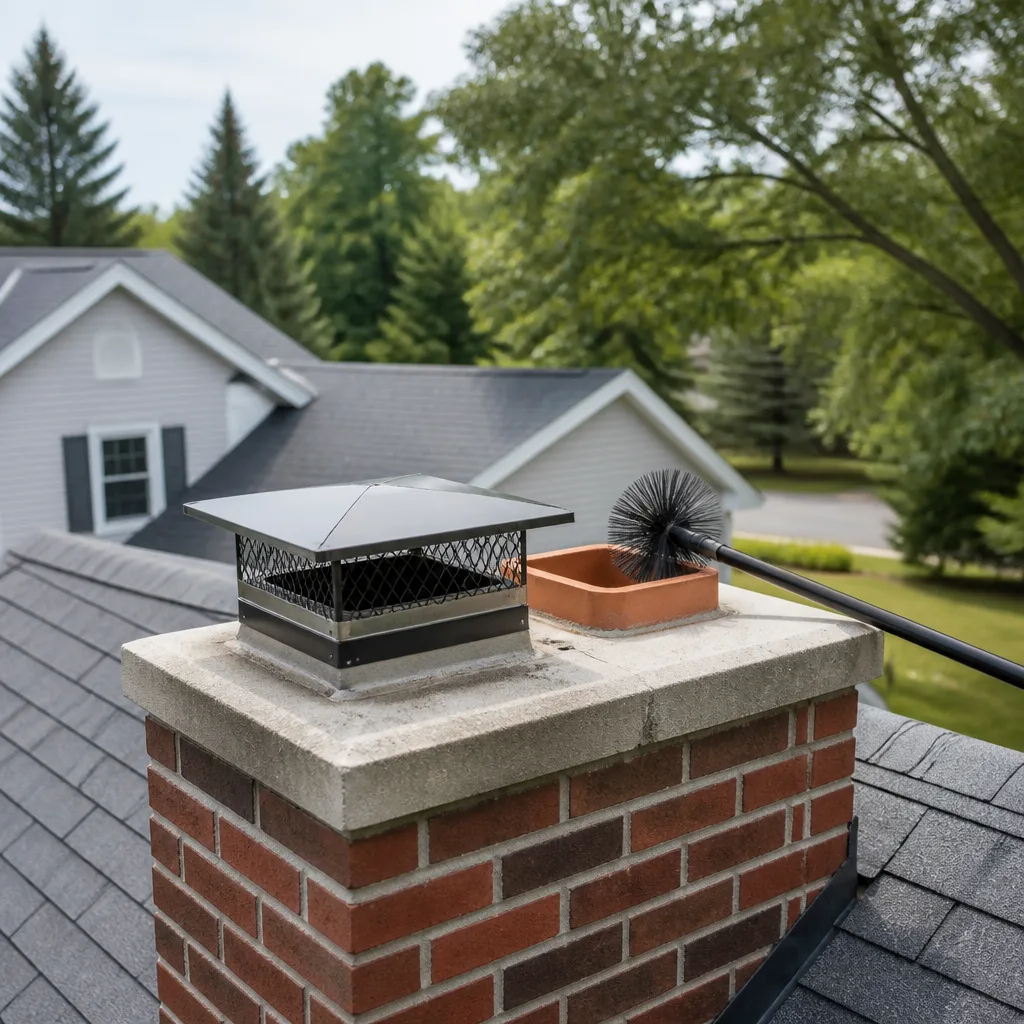 Sweep & inspection
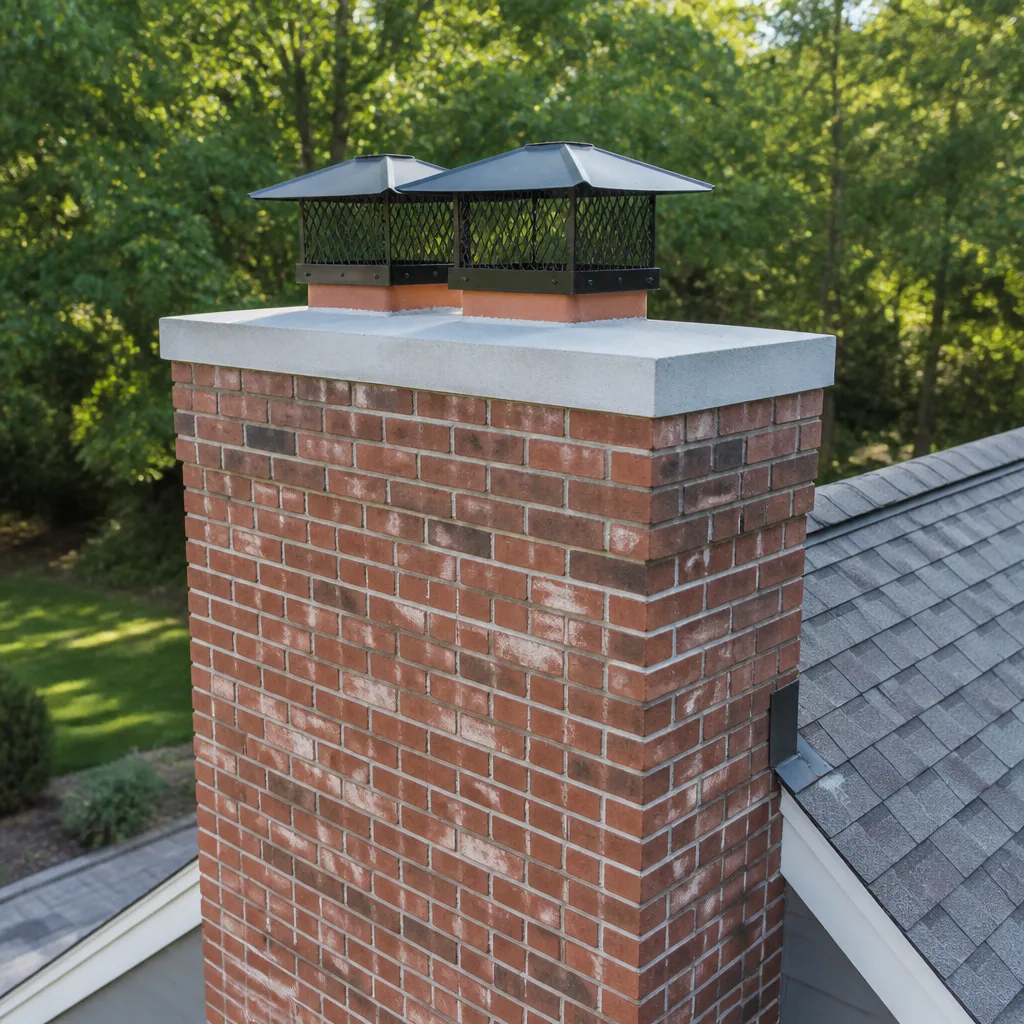 Caps & crowns
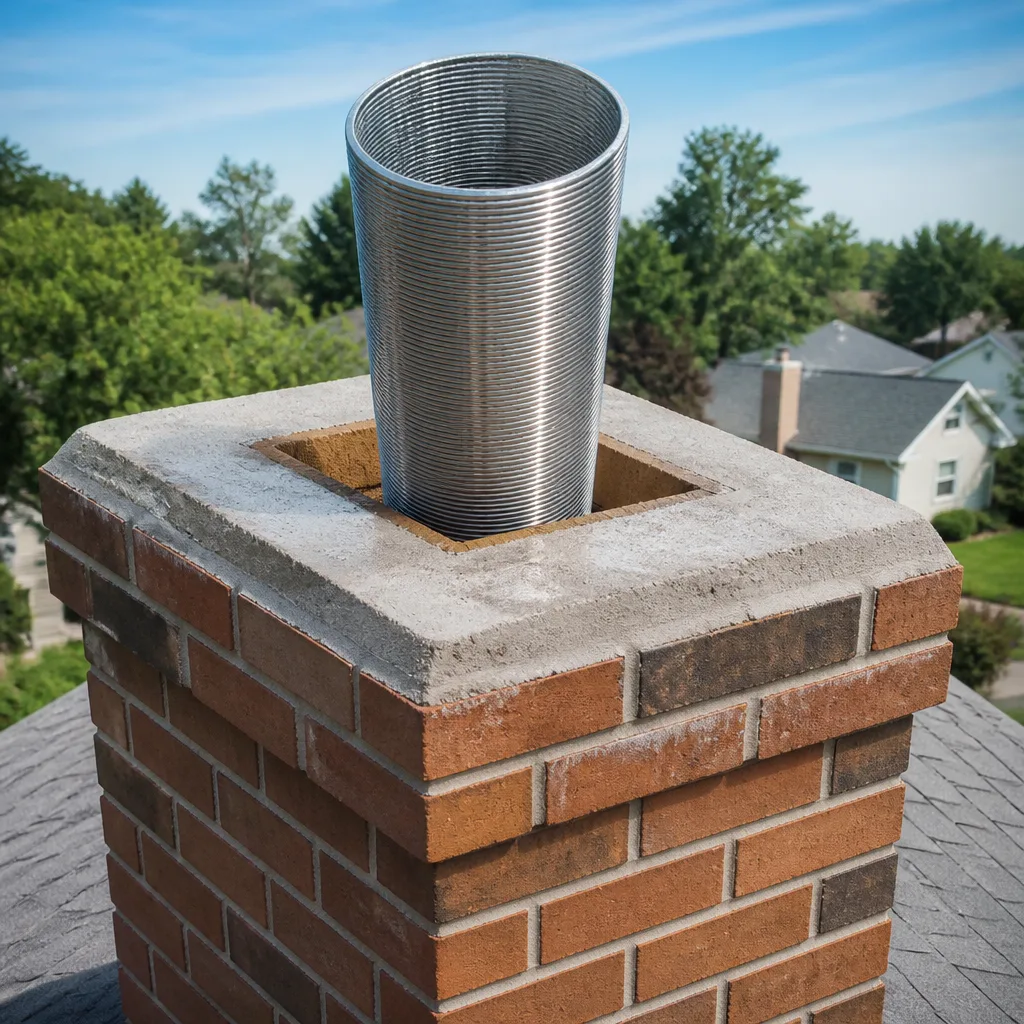 Flue relining
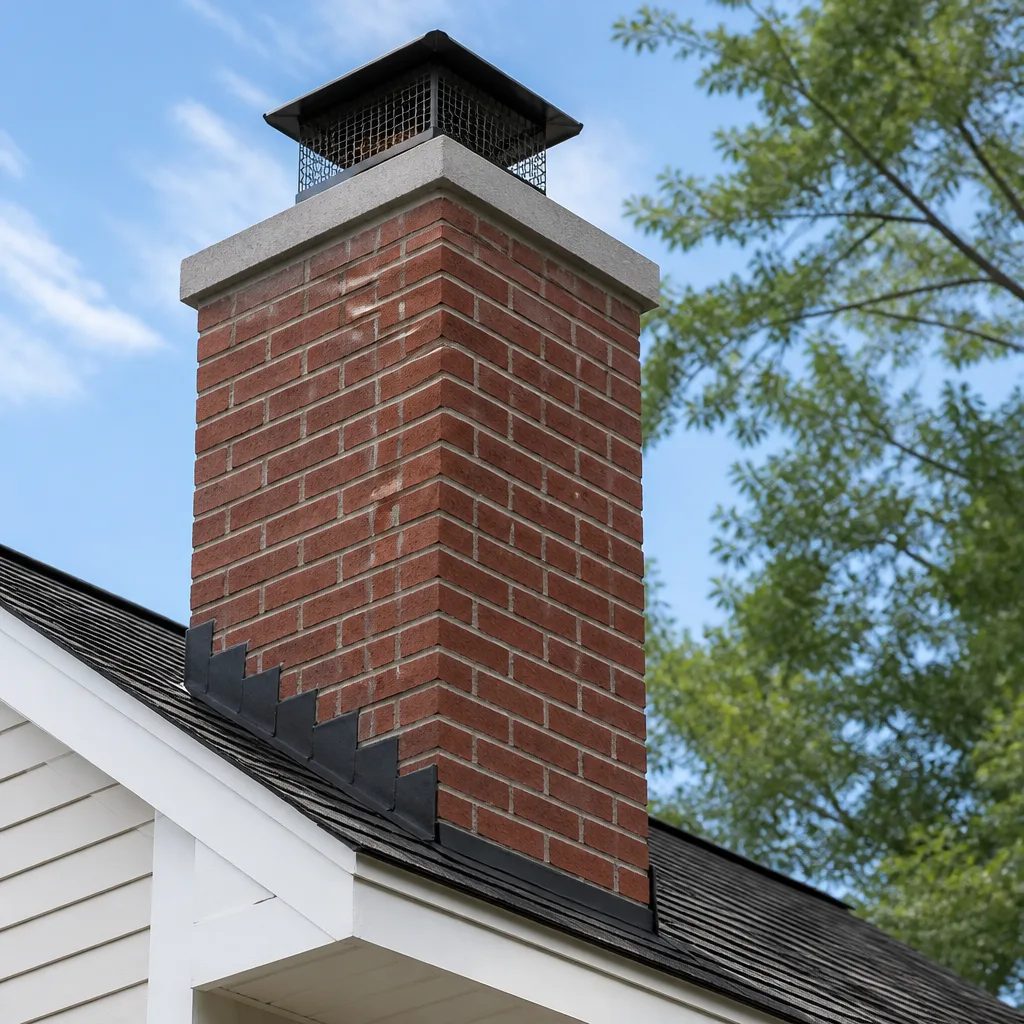 Masonry repair
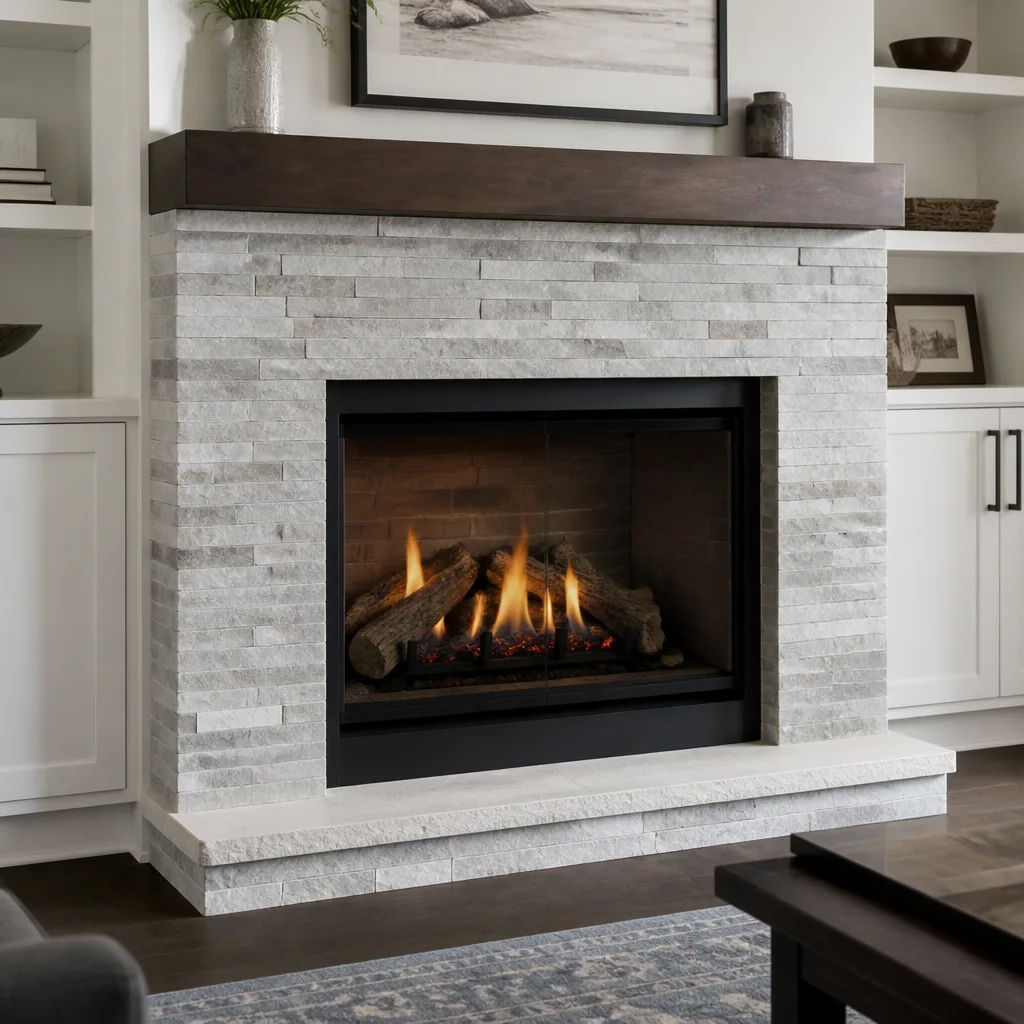 Gas fireplace service
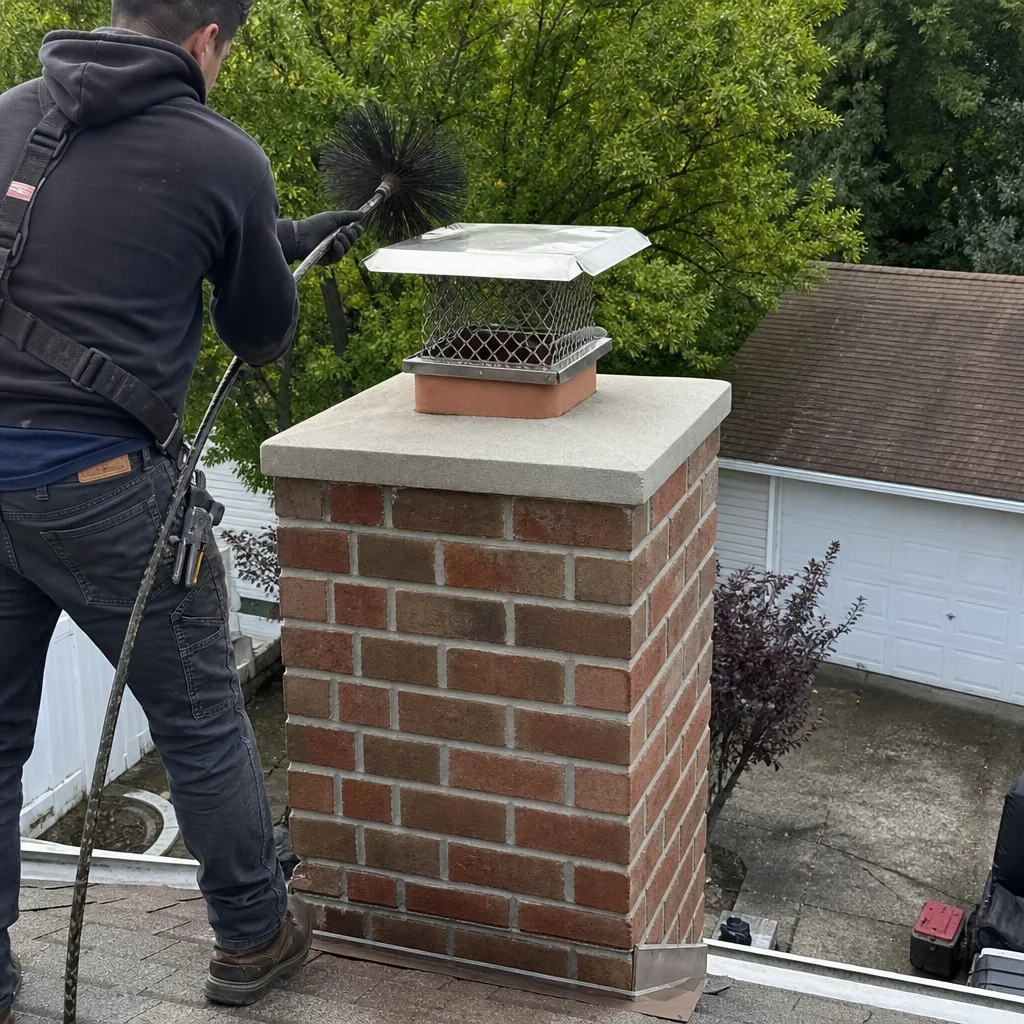
Level 1 sweep and inspection to the NFPA 211 annual standard - flue, crown, cap, and flashing checked and photographed
Chimney sweep logs do not sweep chimneys. They loosen some creosote - which then falls where a brush and vacuum still have to collect it.
Chimney Cleaning Permits, Codes & Inspections in NY: What You Need to Know
Most Hempstead homeowners don’t realize that the chimney sweeping itself rarely needs a permit, but the inspection that comes with it can determine whether your home sale closes or your insurance claim gets paid. New York layers state fire code, Nassau County building rules, and private insurance requirements in ways that don’t always line up, which means you can be fully code-compliant and still lose an insurance dispute because you can’t produce the right paperwork. This guide maps the actual rules, the paperwork that matters, and the three inspection levels so you’re not learning any of this at the closing table.
Quick Answer
Annual chimney cleaning in Hempstead and across Nassau County does not require a permit under the New York State Uniform Fire Prevention and Building Code. What does trigger permits is structural work: liner replacement, firebox reconstruction, or any masonry repair beyond a minor repoint. Inspections follow NFPA 211 standards, and a Level 2 inspection is required by code whenever a property changes hands, a chimney fire occurs, or the system undergoes any modification. Keep every inspection report and cleaning receipt on file. That documentation is what insurers and buyers actually ask for.
Styles & brands we work with
Table of Contents
- What the New York State Uniform Code Actually Requires
- When a Permit Is Required in Nassau County
- The Three NFPA 211 Inspection Levels, Explained Plainly
- What Your Homeowners Insurance Carrier Wants to See
- Hempstead-Specific Rules and the Building Department Process
- Wood Burning, Air Quality, and Long Island’s Solid-Fuel Rules
- What a Sweep and Inspection Cost in Nassau County
- A Yearly Compliance Checklist for Hempstead Homeowners
What the New York State Uniform Code Actually Requires
The New York State Uniform Fire Prevention and Building Code is the base layer every municipality in the state builds on, including Hempstead and the rest of Nassau County. It adopts NFPA 211 (the National Fire Protection Association standard for chimneys, fireplaces, vents, and solid fuel burning appliances) by reference. That adoption is the key to understanding why your annual chimney cleaning in Hempstead doesn’t require a permit, but a cracked flue liner replacement does.
Under the Uniform Code, routine maintenance of an existing system is not a regulated construction activity. Cleaning, sweeping, and visual inspection fall into the maintenance category. The code’s permit requirements kick in when you’re altering the system: changing the liner, rebuilding the firebox, replacing the crown, or modifying the flue size or configuration. This distinction trips people up all the time because it feels backwards. The act of brushing soot out of a flue is unregulated. The act of dropping a new liner down that same flue is a building modification requiring a permit under the code’s structural provisions.
The code also sets clearance-to-combustibles requirements, hearth extension dimensions, and smoke detector interconnection rules that apply when a fireplace gets rebuilt or a new appliance gets installed. If your existing fireplace predates current code, you’re grandfathered for continued use as long as the system isn’t modified. But the moment you alter it, current code applies to the entire affected portion of the system. In our experience in Hempstead, this is where homeowners get surprised: they call us to fix a cracked firebox brick and discover the entire fireplace now has to be brought up to current clearance and liner standards.
The practical takeaway: annual cleaning is never a permit event in New York State. Repairs that touch the structure of the chimney often are. When in doubt, check with Nassau County. We’ve also seen Chimney Inspection in Hempstead reports get cited by code officials during renovation approvals, so keeping those records current matters beyond insurance.
When a Permit Is Required in Nassau County
Nassau County operates its own building department that administers the state code locally. If your chimney work requires a permit under state law, you pull it through Nassau County. The permitting process isn’t complicated, but it does require a clear scope of work and, for larger jobs, a licensed contractor’s signature. Here’s what triggers a permit versus what doesn’t.
Work That Requires a Permit
- Flue liner replacement or relining. Whether you’re replacing a clay tile liner or installing a stainless steel liner like DuraFlex, this is a structural modification to the venting system.
- Firebox reconstruction. Rebuilding the firebox floor or walls beyond a single brick replacement changes the fire safety envelope of the fireplace.
- Chimney crown rebuild. A new poured crown changes the chimney’s exterior dimensions and weatherproofing profile.
- Full or partial chimney rebuild. Any masonry work from the roofline down that alters structure.
- Installing a new flue or appliance. Adding a wood stove, insert, or new fireplace where none existed previously.
Work That Does Not Require a Permit
- Annual chimney sweeping and cleaning. This is routine maintenance, not construction.
- Level 1, 2, or 3 inspections. Inspections are documentation events, not modifications.
- Minor repointing. Filling small mortar joint gaps on the exterior chimney does not change the structure, though extensive repointing that rebuilds significant sections may cross the line into permit territory.
- Chimney cap replacement. Swapping an existing cap for a new one (like a Famco or Gelco cap) is an accessory replacement, not a structural change.
- Damper repair or replacement. Replacing a throat damper or installing a top-sealing damper on an existing flue does not alter the flue itself.
When we do Chimney Repair in Hempstead that crosses into permit territory, we spell out in the written scope whether a permit is required, what it covers, and who handles the paperwork. That written scope is part of how we operate under the Garrison Standard: the price and the scope are in writing before any tool comes off the truck. No homeowner should have to guess whether their liner job is on the books with Nassau County.
The Three NFPA 211 Inspection Levels, Explained Plainly
NFPA 211 defines three inspection levels, and understanding the difference between them is the single most valuable thing a Hempstead homeowner can do before buying, selling, or filing an insurance claim. Here’s what each one is, when it’s required, and what it actually involves.
Level 1: The Annual Check
What it is: A visual inspection of the accessible portions of the chimney, fireplace, and flue. The technician looks for blockages, creosote buildup, flue damage, damper function, and general condition. No special equipment, no roof access unless the chimney is easily reachable.
When it’s required by code: Annually, for any chimney that is used regularly, as part of routine maintenance. The code requires that chimneys be inspected before each heating season and that any unsafe conditions be corrected before use.
When it’s recommended by practice: Every year, even if you only burn a few fires. Creosote deposition depends on wood type, burn temperature, and frequency, but it accumulates in every system that gets used.
What you get: A written report noting what was found and what, if anything, needs attention. This is the document your insurance carrier wants to see after a chimney-related claim.
Level 2: The Transaction Inspection
What it is: Everything in a Level 1, plus a video camera scan of the entire flue interior, from the firebox up through the chimney crown. This is the inspection that sees what the naked eye can’t: hidden cracks in clay tiles, gaps between liner sections, or an improperly sized flue.
When it’s required by code: This is the one that catches homeowners at closing. NFPA 211 requires a Level 2 inspection whenever a property is sold or transferred, whenever a chimney fire has occurred, whenever the system is changed (new liner, new appliance, new fuel type), or whenever an event like an earthquake, lightning strike, or building settlement may have damaged the chimney. In Nassau County, the home sale requirement means most real estate transactions involving a fireplace or wood stove need one.
Why it matters: A Level 2 is not optional when you sell your home in Hempstead or most Nassau County municipalities. Many sellers learn this at the closing table when the buyer’s attorney requests it. If the camera scan reveals a cracked liner, the sale can stall until the repair is done and documented. Having a Level 2 already on file from a previous sweep short-circuits this whole problem.
What you get: A written report plus, from any reputable company, video or still images of the flue interior. At Flint Chimney Co Hempstead, our inspection reports include camera footage and a photo report with every Level 2, because you should never be told you need a liner replacement without seeing the evidence yourself.
Level 3: The Invasive Inspection
What it is: A Level 1 plus partial demolition of the chimney structure to access hidden areas. This may mean removing a section of drywall, opening a chase, or cutting into the chimney exterior.
When it’s required by code: When a Level 1 or Level 2 inspection suggests a serious problem that cannot be fully evaluated without physical access. Level 3 is rare for routine maintenance but becomes necessary when a chimney fire has occurred and the inspector needs to determine if the structure behind the flue is sound.
What you get: A definitive assessment of the chimney’s structural condition. A Level 3 inspection is a diagnostic event, not a routine service, and it’s typically scheduled only after a Level 2 has flagged a concern.
Here’s a quick-reference table for the three levels:
- Level 1: Visual access only. Annual requirement. Cost: typically bundled with a standard sweep.
- Level 2: Video camera scan of the entire flue. Required on home sale, chimney fire, or system change. Cost: typically $200 to $400 when performed as a standalone or with a sweep.
- Level 3: Partial demolition to access hidden areas. Only when prior levels suggest hidden structural problems. Cost: variable, quoted case by case.
What Your Homeowners Insurance Carrier Wants to See
Insurance is where most chimney compliance gaps actually surface on Long Island. Your policy likely covers chimney-related fire or smoke damage, but the carrier’s claims adjuster is going to ask for documentation before cutting a check. If you can’t produce it, you’re arguing from a weak position, even if the work itself met code.
Most homeowners insurance carriers in New York require three things after a chimney-related fire or smoke claim:
- A documented inspection within the past 12 months. Most carriers want a Level 1 inspection at minimum, performed by a qualified technician. If the chimney had been modified or the home was recently purchased, they may demand a Level 2.
- Proof of cleaning at recommended intervals. For a regularly used fireplace, that means annual cleaning. A receipt or service record showing the date, what was done, and the company that performed it is the standard documentation.
- Evidence of repair before the loss event, if a known issue existed. If a previous inspection flagged a problem and you ignored it, the carrier may deny the claim on the grounds of negligence. The insurance contract typically requires you to maintain the property in a condition that prevents foreseeable loss.
The failure pattern we see in Hempstead goes like this: homeowner has a creosote fire, calls the carrier, the adjuster asks for the last cleaning receipt, and the receipt is from 2018. The claim gets denied or reduced because the homeowner can’t prove they exercised reasonable care. It doesn’t matter that the cleaning itself isn’t required by code. The carrier’s underwriting standard is what governs, and that standard expects annual maintenance.
Keeping a file with every sweep receipt and inspection report is about as cheap as compliance gets. At Flint Chimney Co Hempstead, every Chimney Sweep in Hempstead includes a written service record, and every inspection includes a written report. That paperwork is what protects you when the claim adjusts.
Hempstead-Specific Rules and the Building Department Process
Hempstead sits within Nassau County’s building department jurisdiction, which means you’re pulling permits from the county, not a village-specific building office (though some incorporated villages in the area have their own local enforcement). The process for a permit on chimney work follows the standard Nassau County path: submit the application with a scope of work, provide drawings or specifications for larger jobs, and pay the fee based on the project valuation. For most chimney repairs, the permit is issued within a few weeks, and the work is inspected after completion.
What changes in Hempstead is the age and style of the housing stock. Hempstead has a high concentration of homes built between 1940 and 1975, many with original masonry chimneys that have seen 60 to 80 years of freeze-thaw cycles. Long Island winters put real stress on exterior masonry: water gets into micro-cracks, freezes, expands, and slowly turns small mortar gaps into structural problems. We regularly see spalled brick, cracked crowns, and rotted flashing on Hempstead chimneys that have never had any water repellent applied.
When you pull a permit for chimney repair in Nassau County, the county inspector will come out to verify the work after completion. If the repair involves a liner, the inspector will want to see that the liner is properly sized for the appliance it serves and that all clearances are met. If you’re working with a contractor, they should handle the permit and the inspection coordination. If you’re pulling it yourself, plan for the inspection to be the last step before the job is officially closed out.
One thing specific to Hempstead and much of Nassau County: oil-to-gas conversions are common, and when a homeowner switches from an oil furnace to a gas one, the existing chimney often gets repurposed or abandoned. If the chimney is abandoned, code requires it to be properly sealed and marked. If it stays in service for a gas appliance, it typically gets a stainless steel liner sized for the gas exhaust. These conversions have driven a lot of the liner work we do, and they’re a permit event. If you’re planning a conversion, that’s a conversation to have with your contractor before the furnace gets swapped.
Wood Burning, Air Quality, and Long Island’s Solid-Fuel Rules
New York’s air quality rules for solid fuel burning come from both the state level and, in some cases, local ordinances. The state’s position, through the Department of Environmental Conservation, is that properly operated, EPA-certified wood stoves and properly maintained fireplaces are acceptable sources of residential heat. The state does not ban wood burning.
What changes on Long Island is density. Nassau County is the second most densely populated county in New York State, and with density comes nuisance complaints. Smoke that drifts into a neighbor’s window becomes a quality-of-life issue, and some Long Island municipalities have taken a harder line on wood burning in response to air quality concerns. In practice, this means:
- Open fireplaces are generally permitted for recreational use as long as they’re not creating a persistent nuisance.
- Wood stoves installed in Nassau County must meet EPA certification standards, which became stricter in 2020 with the implementation of New Source Performance Standards.
- Some villages in the broader Long Island area restrict the installation of new wood-burning appliances, though this is less common in Hempstead proper than in some adjacent communities.
- Outdoor wood boilers are heavily restricted statewide and are effectively nonexistent in Nassau County residential settings.
The practical answer for a Hempstead homeowner: you can burn wood in an existing open fireplace. You should use seasoned hardwood (oak, maple, cherry) to minimize smoke. You should have the chimney swept every year to reduce particulate emissions and creosote buildup. And you should be aware that if a neighbor complains about smoke, the code official’s first question will be whether you’ve had the chimney cleaned and inspected. A clean chimney burns more efficiently and produces less visible smoke, which makes it easier to say yes.
What a Sweep and Inspection Cost in Nassau County
Here’s the pricing range you can expect in the Hempstead and Nassau County market as of 2025. These are honest ballpark figures, not a quote, but they’ll keep you from calling around blind.
- Standard chimney sweep (Level 1 inspection included): $180 to $300 for a single flue open fireplace. A second flue in the same chimney typically adds $50 to $80.
- Level 2 inspection as a standalone: $200 to $400 depending on access, flue height, and whether the chimney serves a fireplace or a furnace flue.
- Chimney cap installation (Famco, Gelco, or Olympia Chimney product): $150 to $350 including the cap and labor, depending on access and cap type.
- Flue relining with a stainless steel liner (DuraFlex or similar): $2,500 to $6,500 depending on flue height, liner diameter, and whether scaffolding or a lift is required. This is the most common major repair, and it is a permit-triggering job in Nassau County.
- Chimney crown rebuild: $800 to $2,000 depending on crown size and condition of the underlying masonry.
- Firebox repointing or minor repair: $300 to $900 for typical crack repairs and mortar replacement.
At Flint Chimney Co Hempstead, every quote is written and delivered before work starts. No exceptions. The number on the invoice is the number you approved, and every repair carries the 365-Day Done Right Promise. If a covered repair fails within one year, we return at no charge. That’s the whole point of the Garrison Standard: price and scope in writing, guarantee on paper, no surprises.
A Yearly Compliance Checklist for Hempstead Homeowners
If you want to stay on the right side of every layer of New York chimney regulation, here’s the annual routine, in order:
- Book a sweep and Level 1 inspection in late summer or early fall. Before the burning season starts, before the rush. A clean chimney is quieter in September than in November.
- File the service record and inspection report. Keep it with your home documents. If a claim happens, this is your evidence.
- Address any findings from the inspection. If the report flags a cracked liner or spalled brick, fix it before you burn. Burning with a known defect is how claims get denied.
- If you’re selling, check whether a Level 2 inspection is already on file. If not, schedule one early. Buyers’ attorneys ask for it at closing, and having it done ahead of time removes a sale variable.
- If you’ve had any chimney modification, verify the permit was closed out. An open permit on the property can complicate a sale.
- Burn only seasoned hardwood. Green wood produces more creosote and more smoke. It’s false economy.
- Keep an eye on the exterior masonry each spring. Freeze-thaw cycles on Long Island are relentless. Small cracks become big ones. A $300 repoint now beats a $3,000 rebuild later.
Common Mistakes to Avoid
- Assuming no permit means no paperwork. A chimney cleaning doesn’t need a permit, but the service record and inspection report are the documents that matter when something goes wrong. Skip the paper trail and you’re unprotected.
- Skipping the Level 2 inspection on a home sale. In Nassau County, this isn’t a nice-to-have. The buyer’s attorney will request it. If the flue has hidden damage, you’ll be negotiating a credit or paying for a repair under closing pressure.
- Burning after a chimney fire. A chimney fire can crack the liner and damage the surrounding masonry. The chimney must be inspected (Level 2 or 3, depending on severity) before it goes back into service. Burning again without an inspection is how small problems become total rebuilds.
- Treating all inspection reports as interchangeable. A Level 1 annual check is not a substitute for a Level 2 video scan. If the situation calls for Level 2, a Level 1 report won’t satisfy the buyer, the insurer, or the code official.
- Ignoring the permit on a liner job. Liner replacements are a structural modification under New York code. An unpermitted liner can surface as an issue years later during a sale, even if the work itself was done well.
- Not knowing what’s in your chimney. Many Hempstead homes have had multiple liners installed over the decades, some for appliances that no longer exist. An old unlined flue serving a new gas appliance is a real safety problem that a camera inspection catches in ten minutes.
- Waiting until November to call. Every chimney company on Long Island is booked solid from November through January. The time to schedule is August, September, or early October.
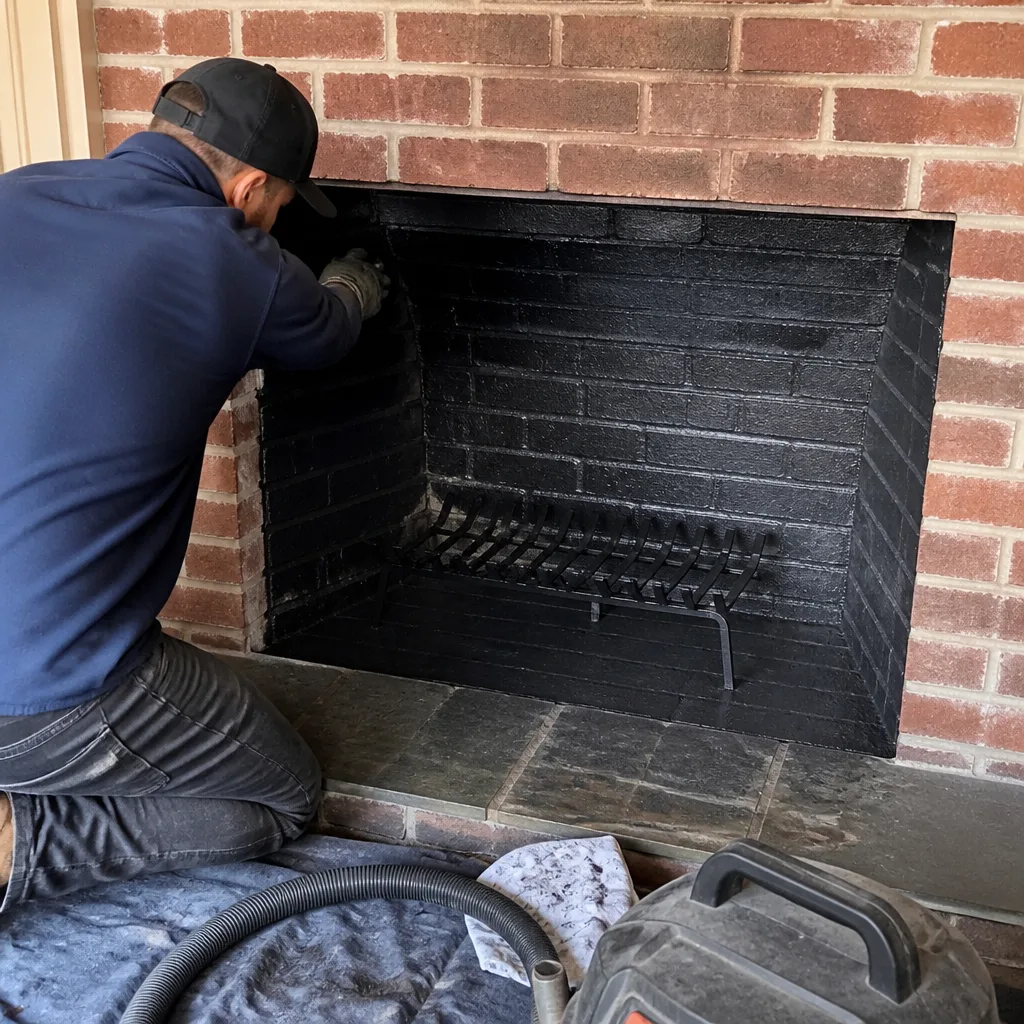
See the difference
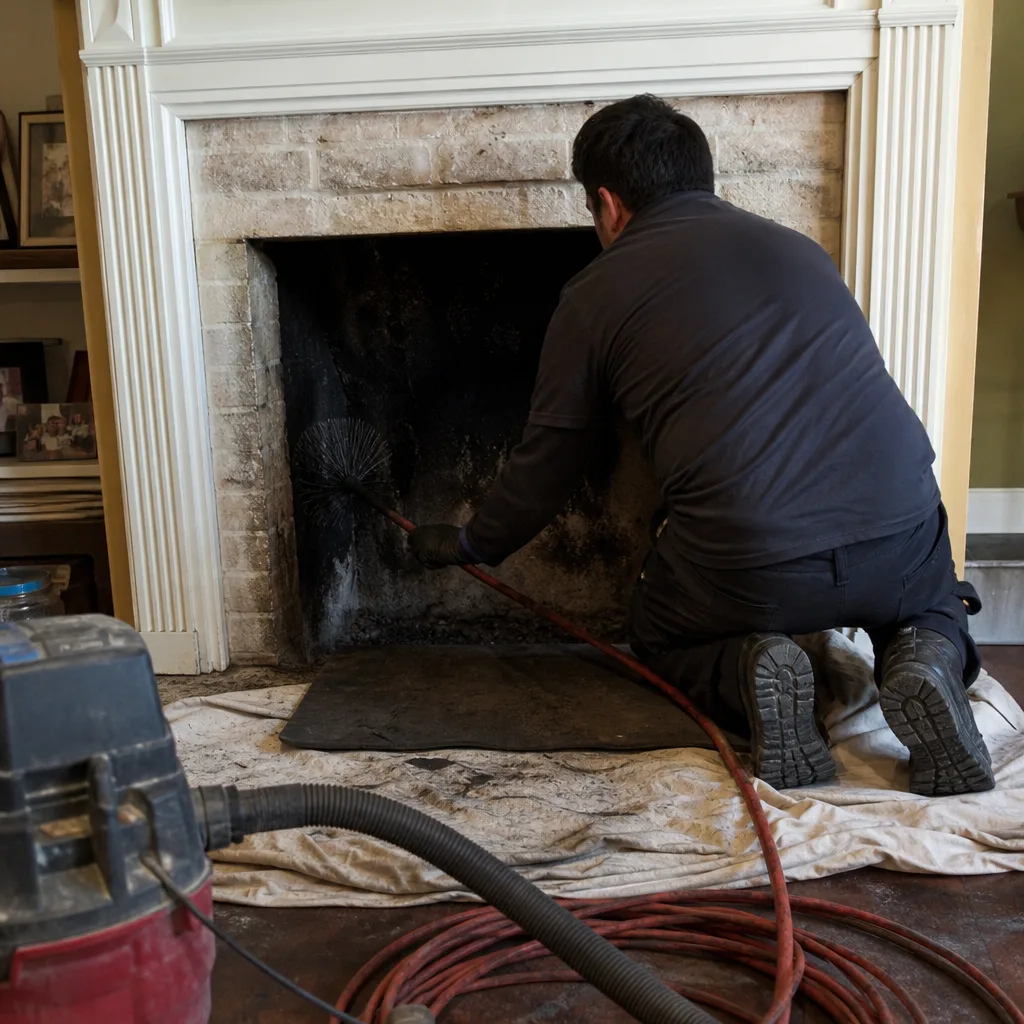 Before
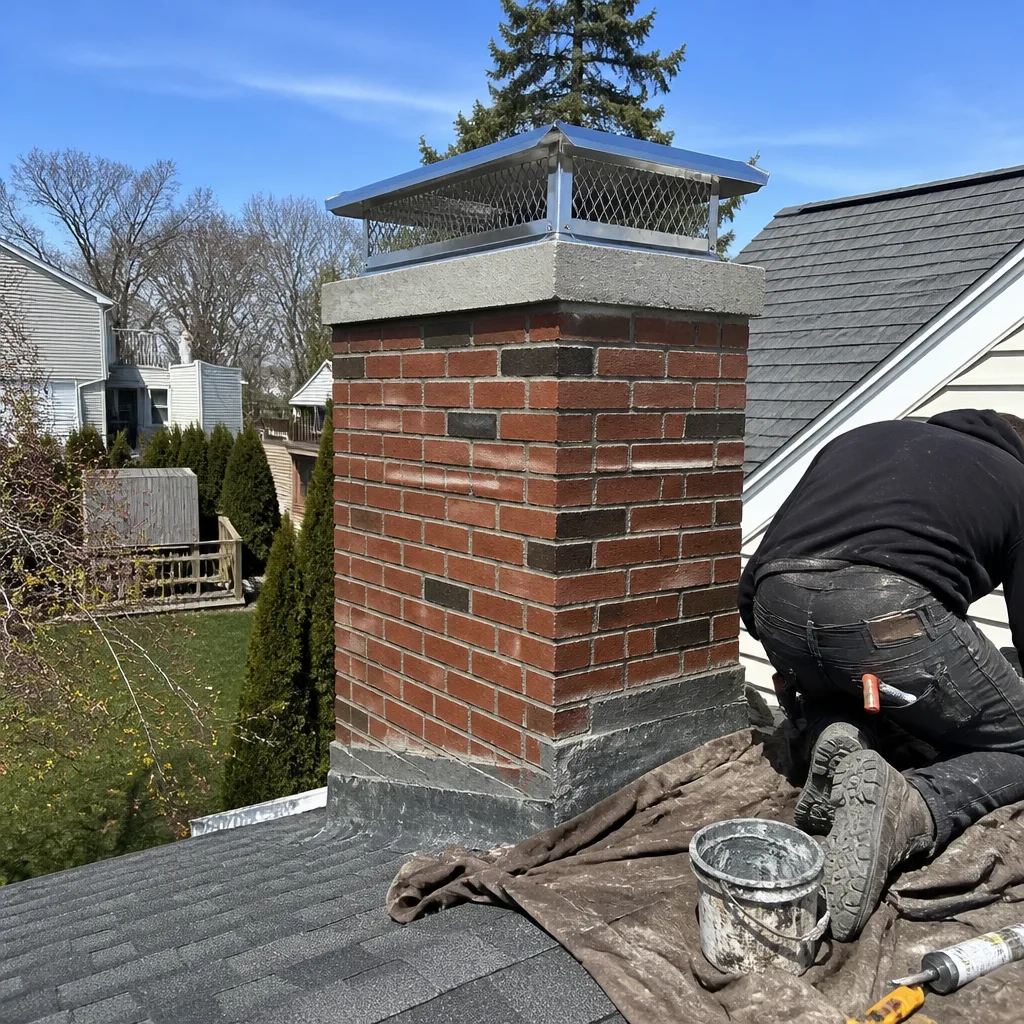 After
After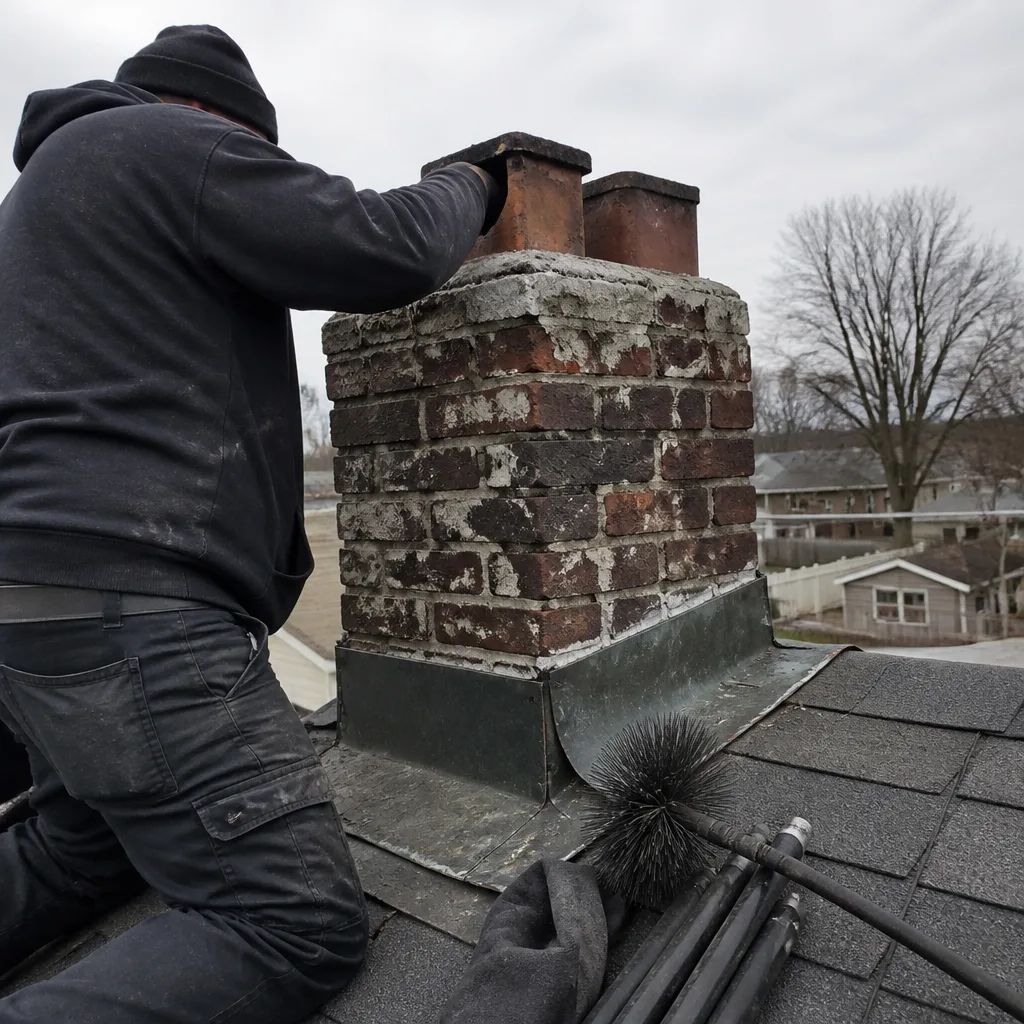 Before
 After
After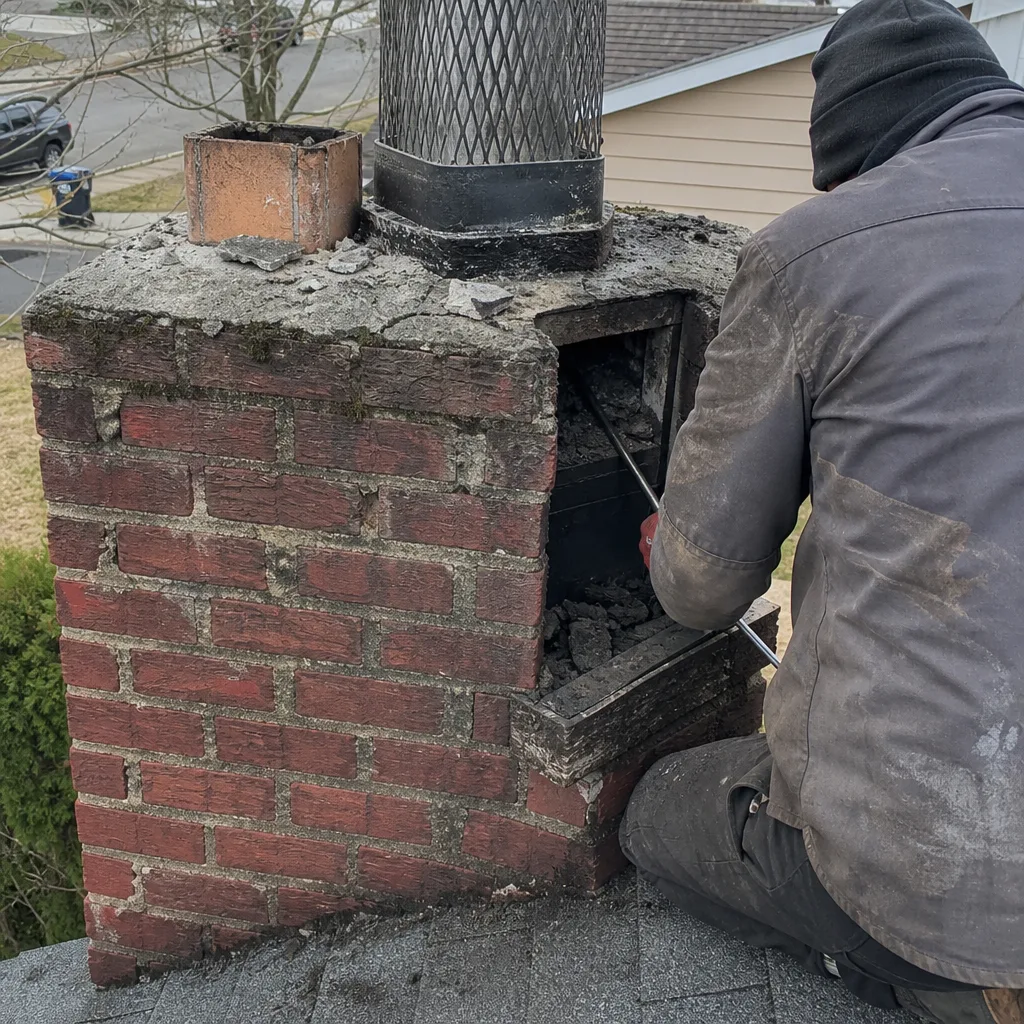 Before
 After
AfterWhen to Call a Professional
You should call a professional for anything beyond a visual check of your fireplace. If you see cracked bricks, a rusted damper, water staining on the ceiling near the chimney, or you smell smoke when the fireplace isn’t in use, that’s a call to make sooner than later. If you’ve had a chimney fire, even a small one, do not burn again until the flue has been camera-inspected. If you’re buying or selling a home in Hempstead and no Level 2 inspection has been done, schedule one before closing. Flint Chimney Co Hempstead offers free estimates in Hempstead. Call (516) 559-6922 and a live person answers, any hour, any day. Our technicians are background-checked and uniformed, and every job gets a written price before the work starts.
To understand more about our process, start with the Flint Chimney Co Hempstead home page. For specifics on our cleaning service, see Chimney Sweep in Hempstead. If you need a camera-equipped evaluation, read about Chimney Inspection in Hempstead. And for liner, crown, or firebox work, Chimney Repair in Hempstead covers what we do and how the guarantee works.
Frequently Asked Questions
No. Annual chimney cleaning is routine maintenance and does not require a permit anywhere in New York State, including Hempstead and Nassau County. What requires a permit is structural modification: liner replacement, firebox reconstruction, crown rebuild, or any change to the chimney’s venting system. A standard sweep and Level 1 inspection is a documentation event, not a construction event. Call (516) 559-6922 to schedule a sweep, and you’ll get a written price before any work starts.
The National Fire Protection Association standard, adopted by New York code, says chimneys should be inspected at least once a year and cleaned when creosote buildup reaches 1/8 inch or when the system is obstructed. For a regularly used fireplace, that translates to an annual cleaning in practice. If you burn more than a cord of wood per season, or if you burn pine or green wood, twice a year may be necessary. In our Hempstead service area, most homeowners do one sweep per year, timed for early fall.
A Level 2 inspection includes everything in a Level 1 plus a video camera scan of the entire flue interior. It is required by code when a property is sold, when a chimney fire has occurred, when the system has been modified, or when an event like a lightning strike or building settlement may have damaged the chimney. In Nassau County, the home sale trigger is the most common reason homeowners get one. The camera sees cracks, gaps, and misalignments that are invisible from the firebox or roof. Call (516) 559-6922 for a Level 2 inspection with full photo documentation.
This is the most common concern we hear from Hempstead homeowners, and it’s a fair one. The honest answer is that you should never accept a liner recommendation without seeing the evidence. A video inspection should show you, in real time, what the flue looks like inside. Cracked clay tiles, gaps between sections, or a flue that’s the wrong size for the appliance are visible on camera. If a company recommends a liner without camera evidence, get a second opinion. At Flint Chimney Co Hempstead, our inspection reports include the footage and still images, and we’ll tell you plainly if a liner can wait. We’ll also tell you if the flue is fine and a cleaning is all you need. No liner is recommended without video proof.
The immediate risk is creosote buildup, which is combustible. A creosote fire burns hot enough to crack clay liners and spread to surrounding framing. Even if no fire occurs, unchecked creosote corrodes the flue over time, and the moisture it traps accelerates masonry deterioration in Long Island’s freeze-thaw climate. The secondary risk is financial: if a fire does occur and you can’t produce a recent cleaning record, your insurance carrier may deny the claim. An annual cleaning costs $180 to $300 in Nassau County. A liner replacement from fire damage costs several thousand. Call (516) 559-6922 to get your chimney on the schedule before the burning season.
Hempstead doesn’t have a standalone municipal chimney inspection ordinance, but Nassau County’s adoption of NFPA 211 means a Level 2 inspection is required by code whenever a property transfers. In practice, the buyer’s attorney will request it during contract review. If you don’t have one, you’ll be getting one under time pressure. A clean Level 2 report with no findings removes a sale obstacle. A report that flags a cracked liner creates one. Having the inspection done before the house goes on the market gives you time to address any findings on your own schedule and budget.
The Bottom Line
Annual chimney cleaning in Hempstead and Nassau County requires no permit, and that’s the easy part. The harder truth is that the paperwork matters as much as the work: inspection reports, cleaning receipts, and closed-out permits are what protect you when a home sale, an insurance claim, or a code enforcement question lands on your doorstep. A Level 2 inspection before selling is the single highest-value move you can make. A written price before work starts and a written guarantee on repairs are what separate disciplined companies from the rest. The Flint Chimney Co Hempstead home page explains how we work under the Garrison Standard, and we’re always reachable at (516) 559-6922.
Written by Hank Delano, Owner at Flint Chimney Co Hempstead, serving Hempstead since 2002.